Detection Engineering case study

SOC Automation and Detection Engineering Homelab

Built and validated an end-to-end SOC detection and response pipeline: Splunk correlation alerts trigger an n8n SOAR workflow that enriches indicators with VirusTotal v3 and asks a local LLM (qwen/qwen3.5-9b, temperature 0.1) for a deterministic HIGH_RISK or LOW_RISK verdict. Each alert opens a DFIR-IRIS case; high-risk verdicts automatically trigger a Velociraptor Windows.Triage.Collection and Wazuh Active Response host isolation, while low-risk alerts are documented and closed. The full path was validated with synthetic high-risk and low-risk scenarios, without live malware or real IOC traffic.
Skills demonstrated

  • Build a realistic SOC homelab with segmented traffic inspection and centralized telemetry.
  • Validate Splunk-driven detections with synthetic high-risk and low-risk events.
  • Automate analyst workflows for enrichment, ticketing, triage, forensics, and containment.
  • Preserve evidence with screenshots that are ready for GitHub and GitHub Pages publication.

Tools used

  • pfSense
  • Squid Proxy
  • Suricata
  • Windows 11
  • Sysmon
  • Wazuh Agent
  • Splunk UF
  • Splunk
  • n8n
  • DFIR-IRIS
  • Velociraptor
  • Wazuh Active Response
  • VirusTotal
  • LM Studio
  • Ollama

Project detail

Overview

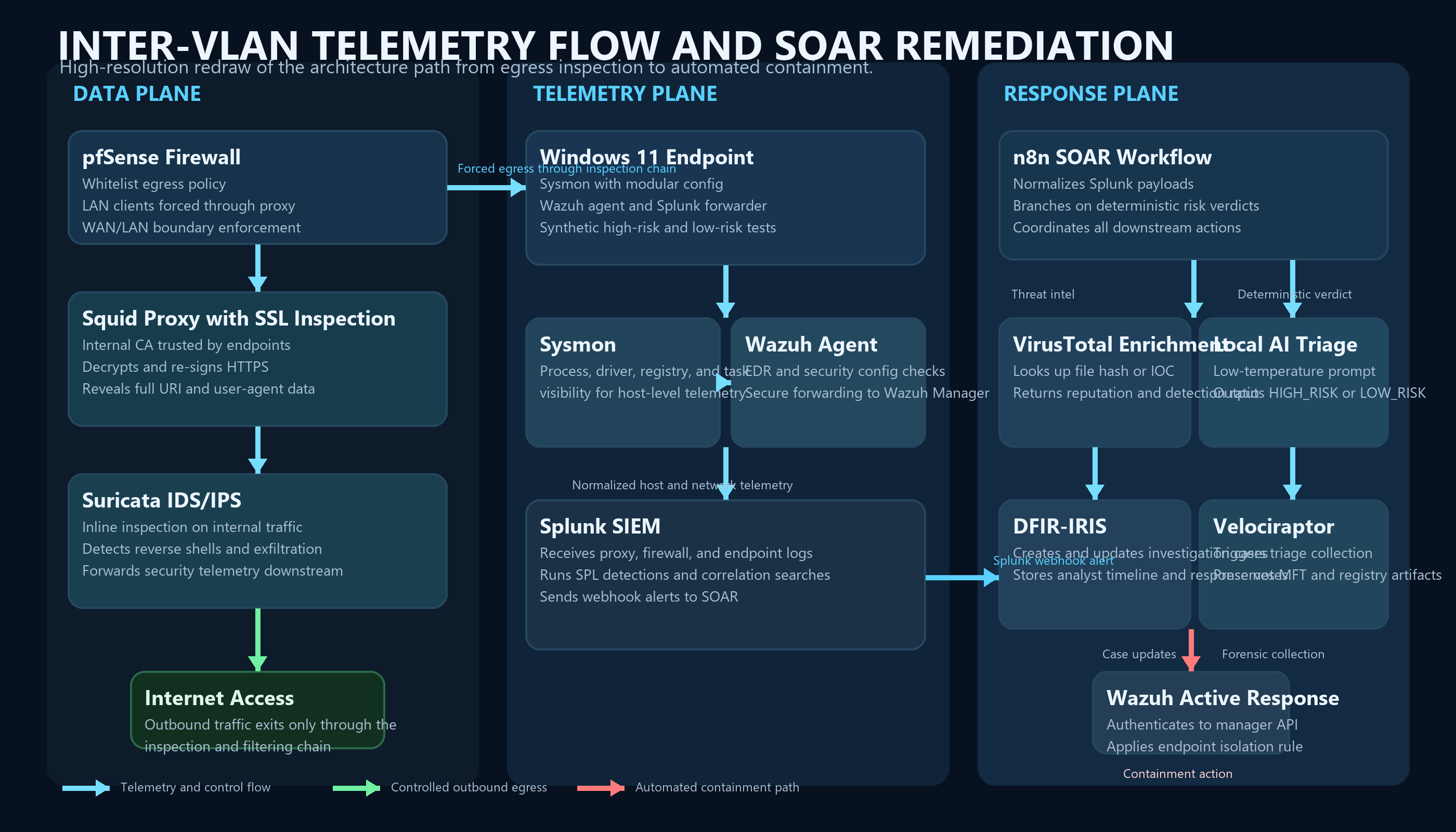
The lab is organized into three operational planes:

  • Data plane: pfSense, Squid Proxy, and Suricata enforce controlled egress, SSL inspection, and network detection coverage.
  • Telemetry plane: Sysmon, Wazuh, remote syslog, and Splunk Universal Forwarder push endpoint and network evidence into Splunk.
  • Response plane: n8n orchestrates VirusTotal, a local LLM triage step, DFIR-IRIS, Velociraptor, and Wazuh Active Response.

Project detail

Lab Stack

LayerComponentsPurpose
Perimeter and inspectionpfSense, Squid Proxy, SuricataForce proxy-based egress, decrypt inspected traffic, and monitor network activity.
Endpoint telemetryWindows 11, Sysmon, Wazuh Agent, Splunk UFGenerate host telemetry and forward it into the SIEM pipeline.
Analytics and correlationSplunkCentralize logs, run searches, and trigger SOAR workflows.
SOAR and case handlingn8n, DFIR-IRISNormalize alerts, enrich evidence, and track investigations.
Forensics and containmentVelociraptor, Wazuh Active ResponseCollect volatile evidence and isolate affected endpoints.
Intelligence and reasoningVirusTotal, local LLM via LM Studio or OllamaEnrich indicators and provide deterministic triage output.

Project detail

Detection and Response Flow

  • Endpoint, proxy, firewall, and IDS telemetry is forwarded into Splunk.
  • A Splunk correlation search sends a webhook payload into n8n.
  • n8n creates or updates a case in DFIR-IRIS.
  • The workflow enriches the alert with VirusTotal.
  • A local LLM returns a deterministic HIGH_RISK or LOW_RISK triage decision.
  • High-risk alerts trigger Velociraptor collection and Wazuh host isolation.
  • Low-risk alerts are documented and closed with supporting context.

Project detail

Validation Approach

Two synthetic scenarios were used to validate the workflow safely:

  • High-risk path: a simulated malicious IOC event designed to trigger escalation, enrichment, forensic collection, and containment.
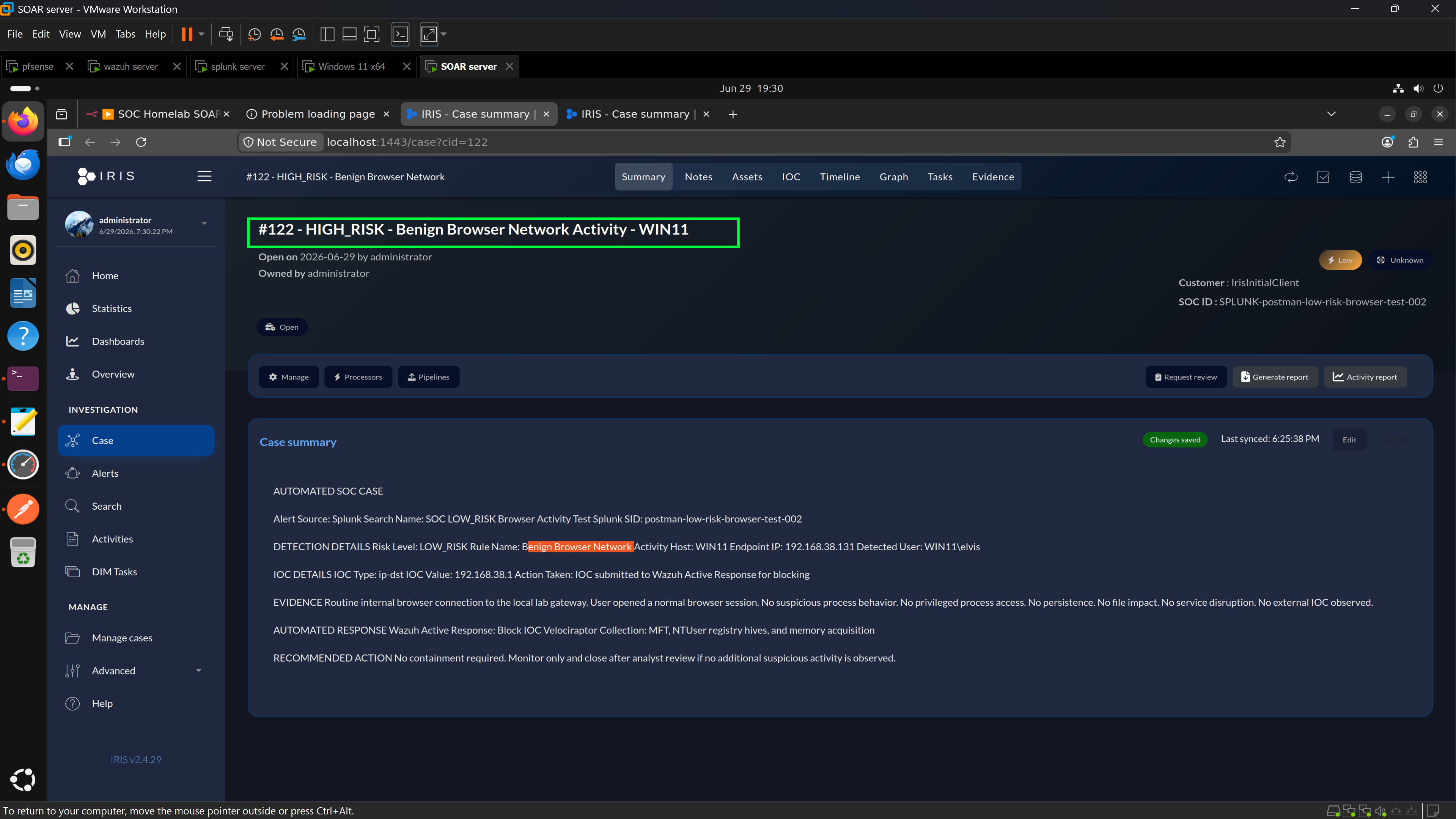
  • Low-risk path: a benign browser and gateway activity event designed to confirm safe closure behavior.

No real malware execution or uncontrolled external traffic was required for these tests.

Project detail

MITRE ATT&CK Mapping

Validation used synthetic JSON events only. No adversary technique was executed live on the wire.

ScenarioTechnique (emulated only)IDDetection sourceResponse evidence
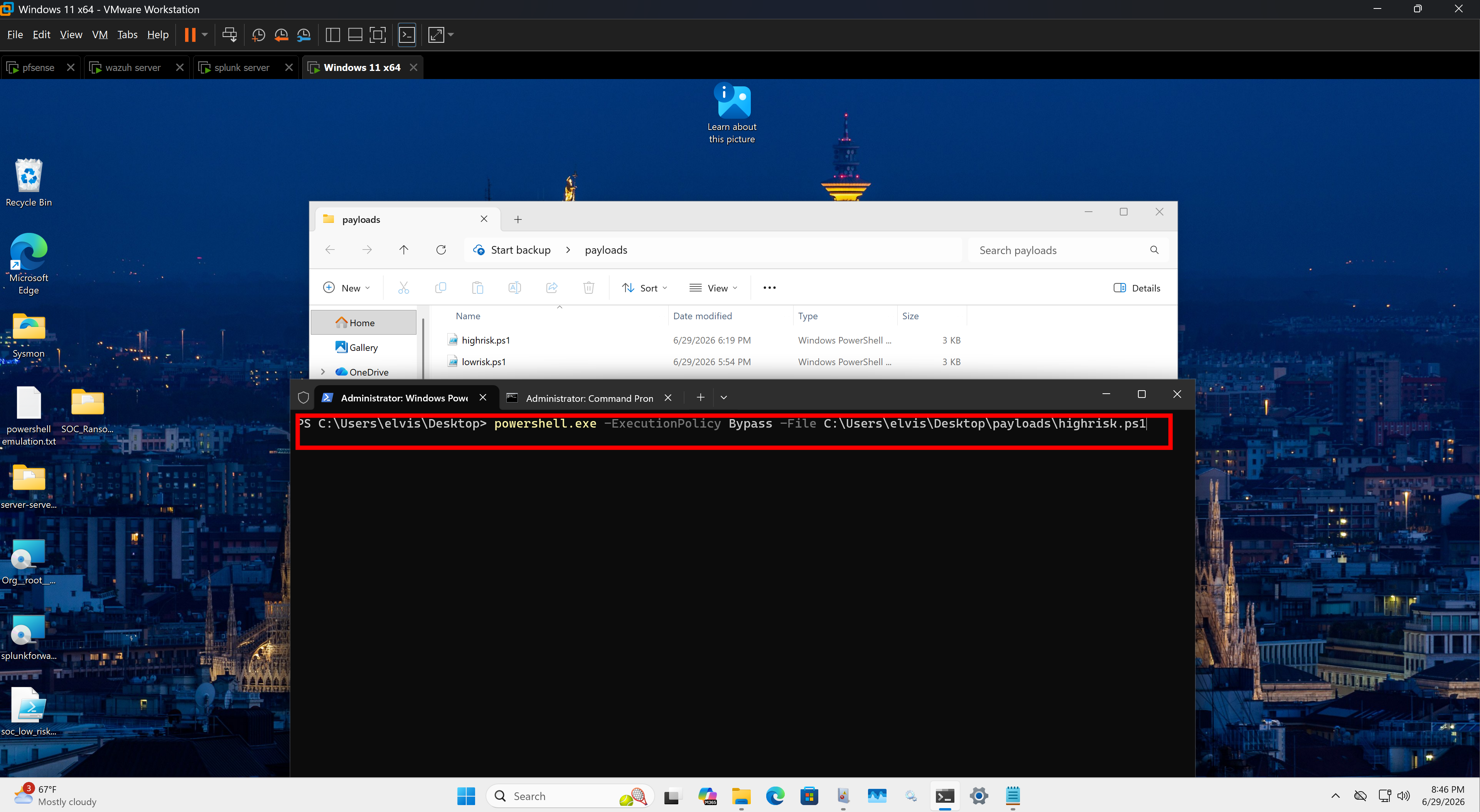
High-risk path (scripts/highrisk.ps1)Emulated scenario (synthetic events, no live execution): PowerShell-associated outbound connection to a VirusTotal-flagged IPN/A — not executedSplunk correlation search (Ref 6), Wazuh alert (Ref 7)Velociraptor collection (Refs 12-14), Wazuh host isolation (Ref 8), DFIR-IRIS case (Ref 11)
Low-risk path (scripts/lowrisk.ps1, original name payload-vt-low-risk.ps1)N/A (benign synthetic browser/gateway activity)N/ASplunk correlation search (Ref 6)Documented and closed (flow step 7)

Published test generators: scripts/highrisk.ps1, scripts/lowrisk.ps1. Architecture write-up: docs/architecture.md.

Project detail

Detection & Response Logic

Summary grounded in the lab blueprint and screenshots. The original SPL saved searches, n8n workflow export, and Wazuh rule files are no longer available. Behaviour below matches docs/architecture.md and the evidence refs. Exact query syntax is not reproduced.

Enrichment source: VirusTotal v3 (confirmed in the June 2026 architecture blueprint and in the synthetic event payloads: threat_intel_source = "VirusTotal").

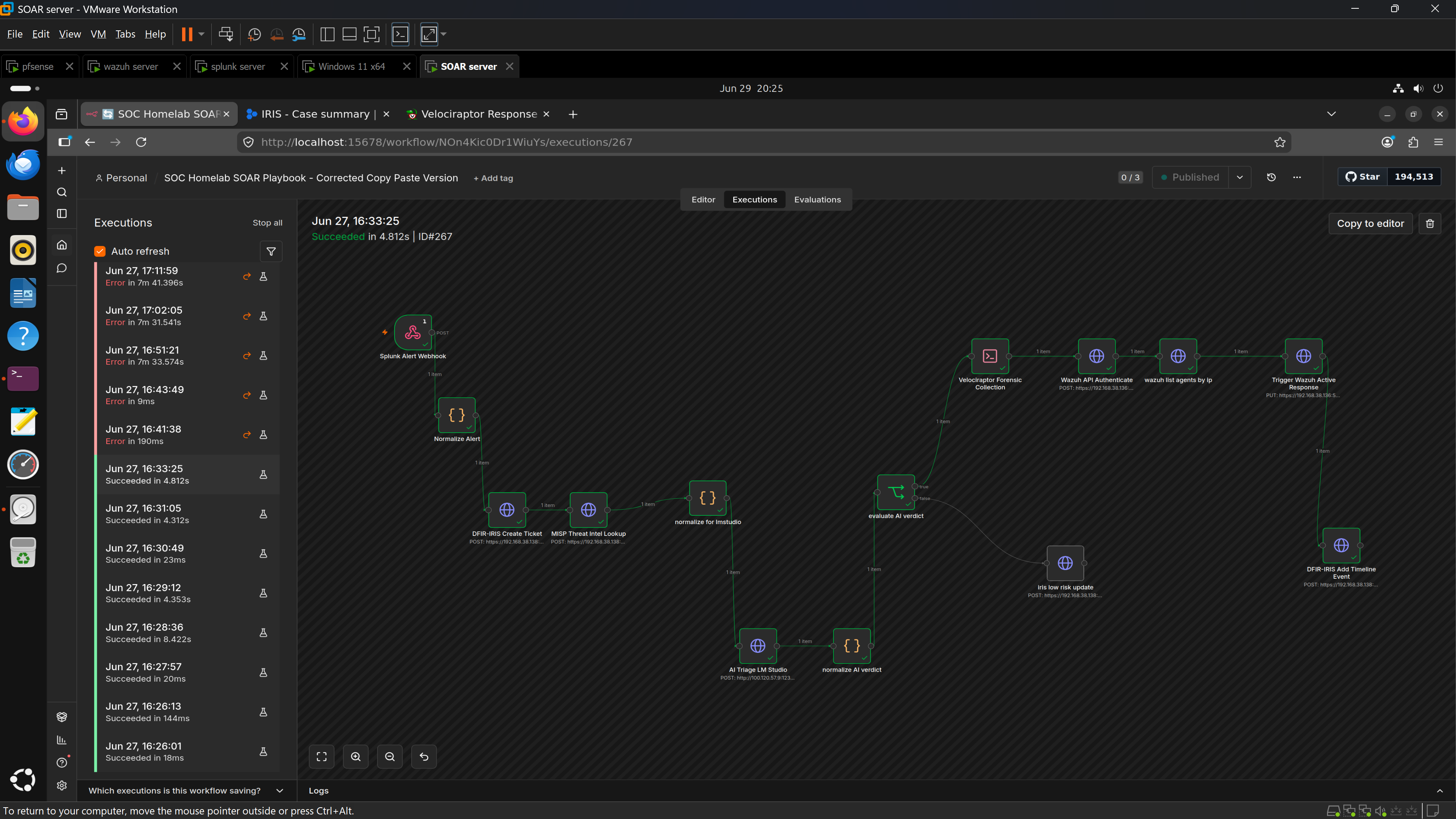
Footnote — Ref 10: The Ref 10 workflow screenshot shows an earlier Shuffle / MISP prototype (node labelled "MISP Threat Intel Lookup"). The production lab design documented in docs/architecture.md uses n8n with VirusTotal v3 enrichment. Treat Ref 10 as historical prototype evidence, not the final enrichment path.

1. Trigger (Splunk, Ref 6)

Synthetic events from scripts/highrisk.ps1 and scripts/lowrisk.ps1 are indexed in Splunk (written as JSON lines under C:\SOAR-Test\soar_vt_test.jsonl; no real IOC connections). A search builds a normalized alert. For the high-risk script the alert carries:

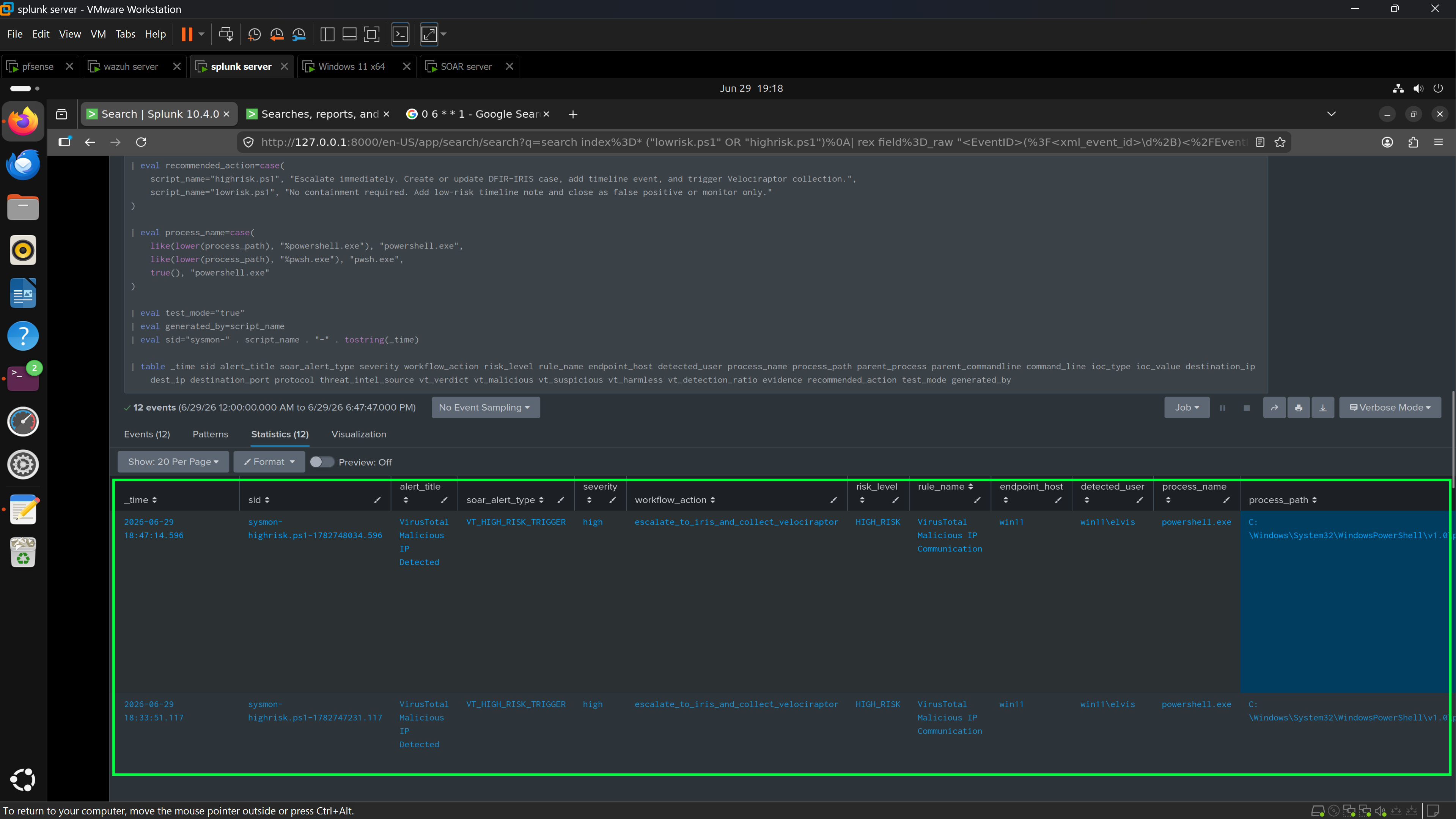
  • alert title "VirusTotal Malicious IP Detected" / rule "VirusTotal Malicious IP Communication"
  • severity high, risk level HIGH_RISK, SOAR alert type VT_HIGH_RISK_TRIGGER
  • workflow action escalate_to_iris_and_collect_velociraptor
  • IOC: documentation address 198.51.100.66 on port 443 (threat_intel_source = VirusTotal)

The low-risk script maps to benign browser/gateway activity and "No containment required… close as false positive or monitor only." Splunk sends the alert to n8n by webhook.

2. Case creation and enrichment (n8n and DFIR-IRIS, Refs 9-11)

In n8n, the alert is normalized, DFIR-IRIS opens a case, then a VirusTotal v3 lookup enriches the indicator (reputation / detection counts).

3. LLM verdict

The enriched alert is passed to a local model qwen/qwen3.5-9b (primary) via LM Studio or Ollama at temperature 0.1; Hermes3-8B and Gemma were also tested. The model must emit FINAL_DECISION: HIGH_RISK or FINAL_DECISION: LOW_RISK. An n8n switch branches on that verdict.

4. Response

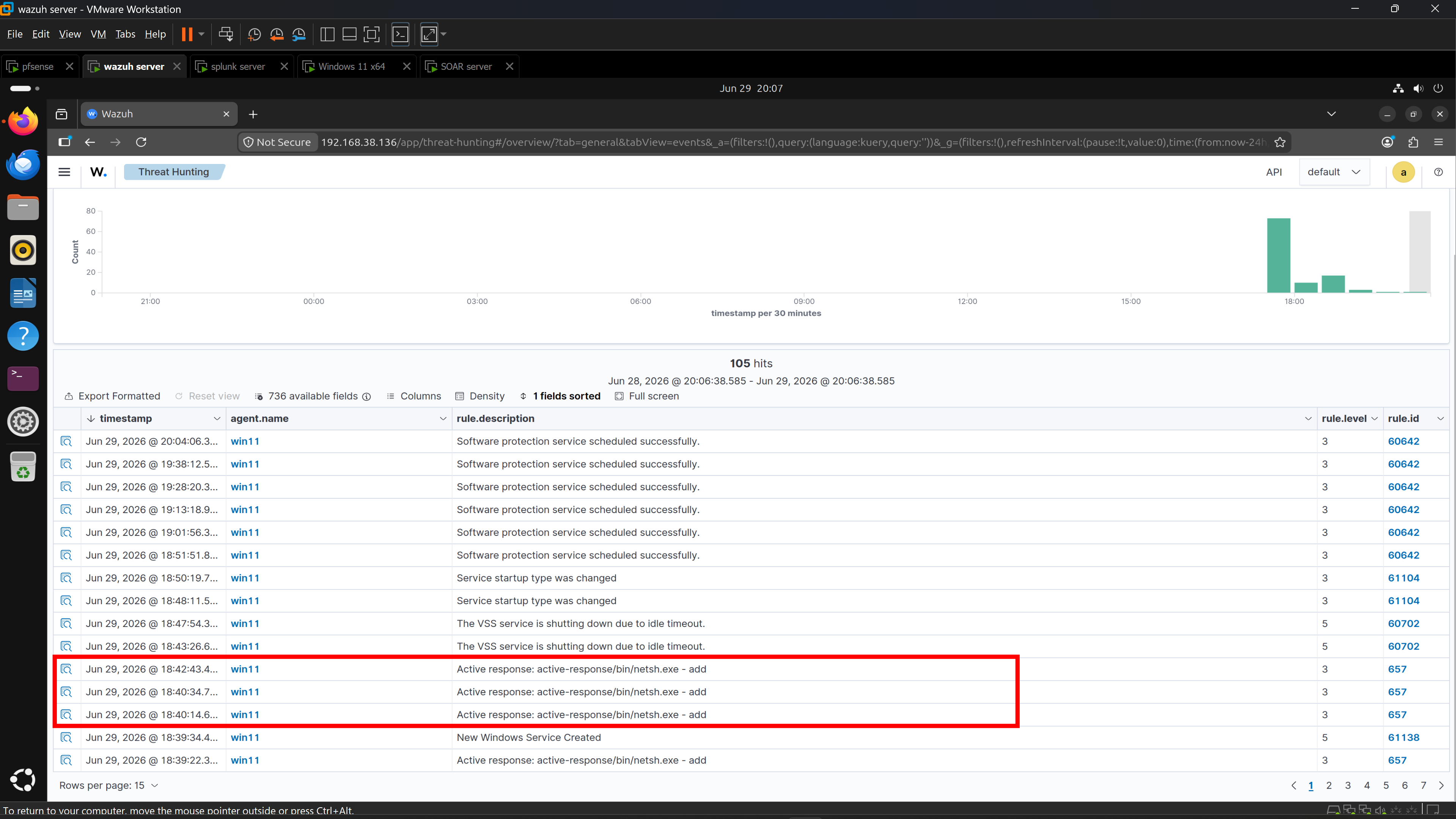
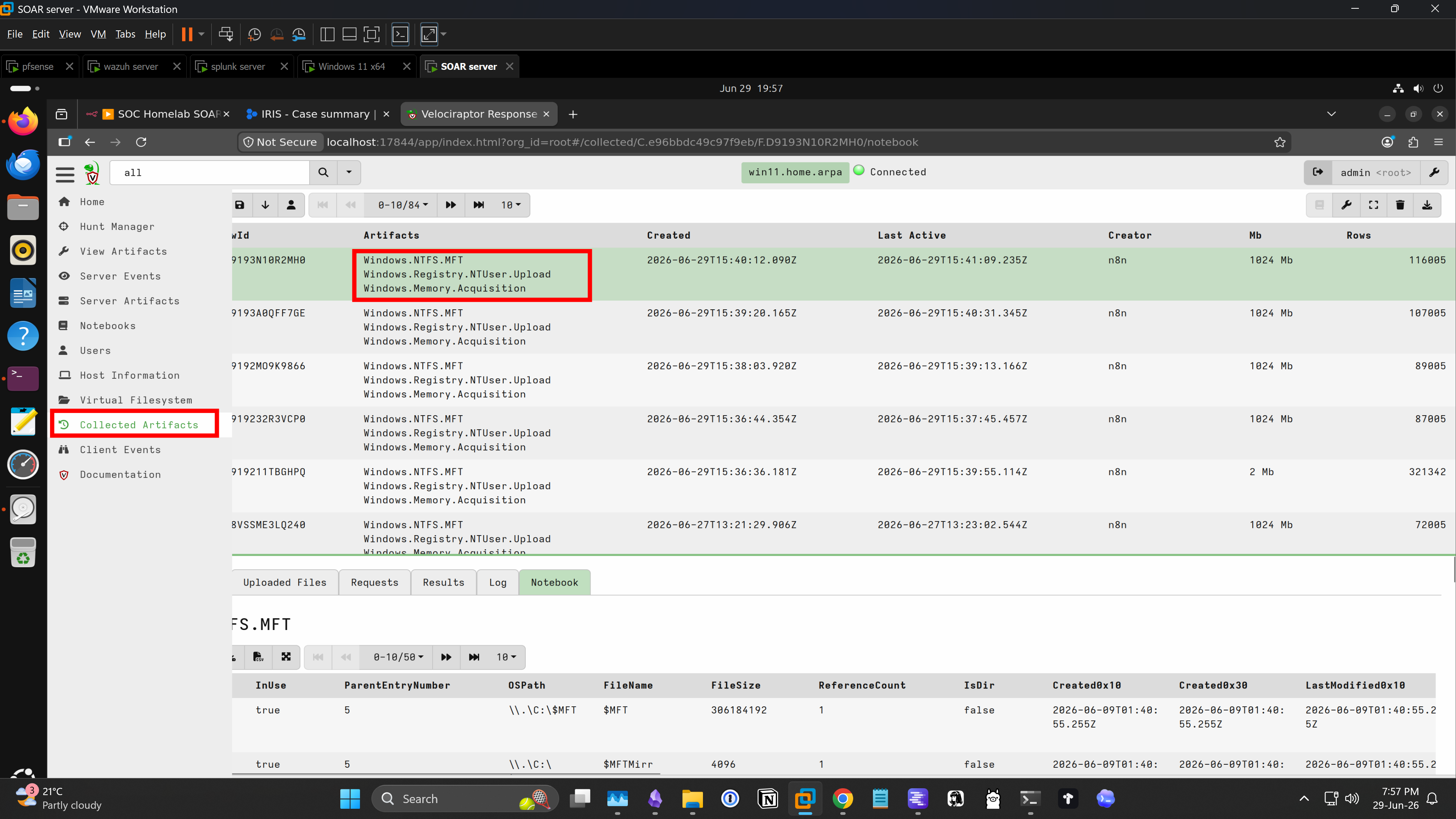
  • HIGH_RISK: Velociraptor runs Windows.Triage.Collection (Refs 12-14). n8n authenticates to the Wazuh Manager REST API (HTTPS port 55000) and triggers Active Response host isolation (e.g. firewall-drop / host-deny) (Ref 8). DFIR-IRIS records a timeline event.
  • LOW_RISK: DFIR-IRIS is updated and the case is documented and closed (flow step 7).

Pseudo-flow

Synthetic JSONL event (highrisk.ps1 / payload-vt-low-risk.ps1)
  -> Splunk search builds normalized alert (severity, risk_level, workflow_action, VT fields)
  -> webhook -> n8n: Normalize Alert
  -> DFIR-IRIS: create case
  -> VirusTotal v3 enrichment
  -> Local LLM (temp 0.1): FINAL_DECISION HIGH_RISK | LOW_RISK
  -> if HIGH_RISK:
        Velociraptor Windows.Triage.Collection
        Wazuh Active Response host isolation
        DFIR-IRIS: add timeline event
     else:
        DFIR-IRIS: low-risk update, document and close

Technical walkthrough

Evidence walkthrough.

Open on GitHub

1. Architecture and topology

Ref 1. Inter-VLAN telemetry flow and SOAR remediation pipeline control vectors.
Network topology and SOAR remediation flow
Ref 2. Consolidated homelab architecture connecting perimeter inspection, telemetry, SIEM, and response services.
Homelab architecture overview

2. Perimeter and endpoint instrumentation

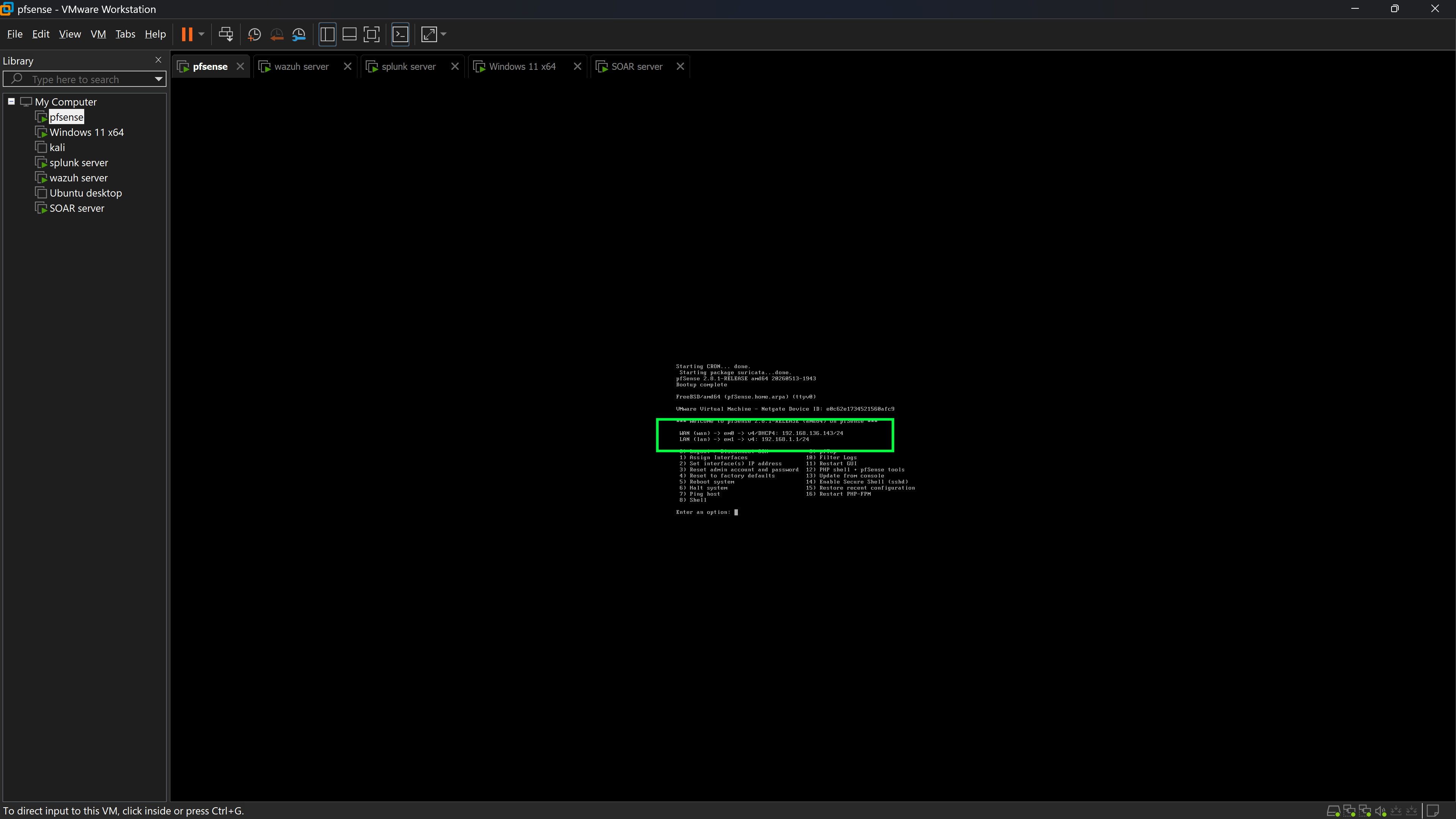
Ref 3. pfSense perimeter configuration supporting LAN control, proxy routing, and inspection.
pfSense perimeter configuration
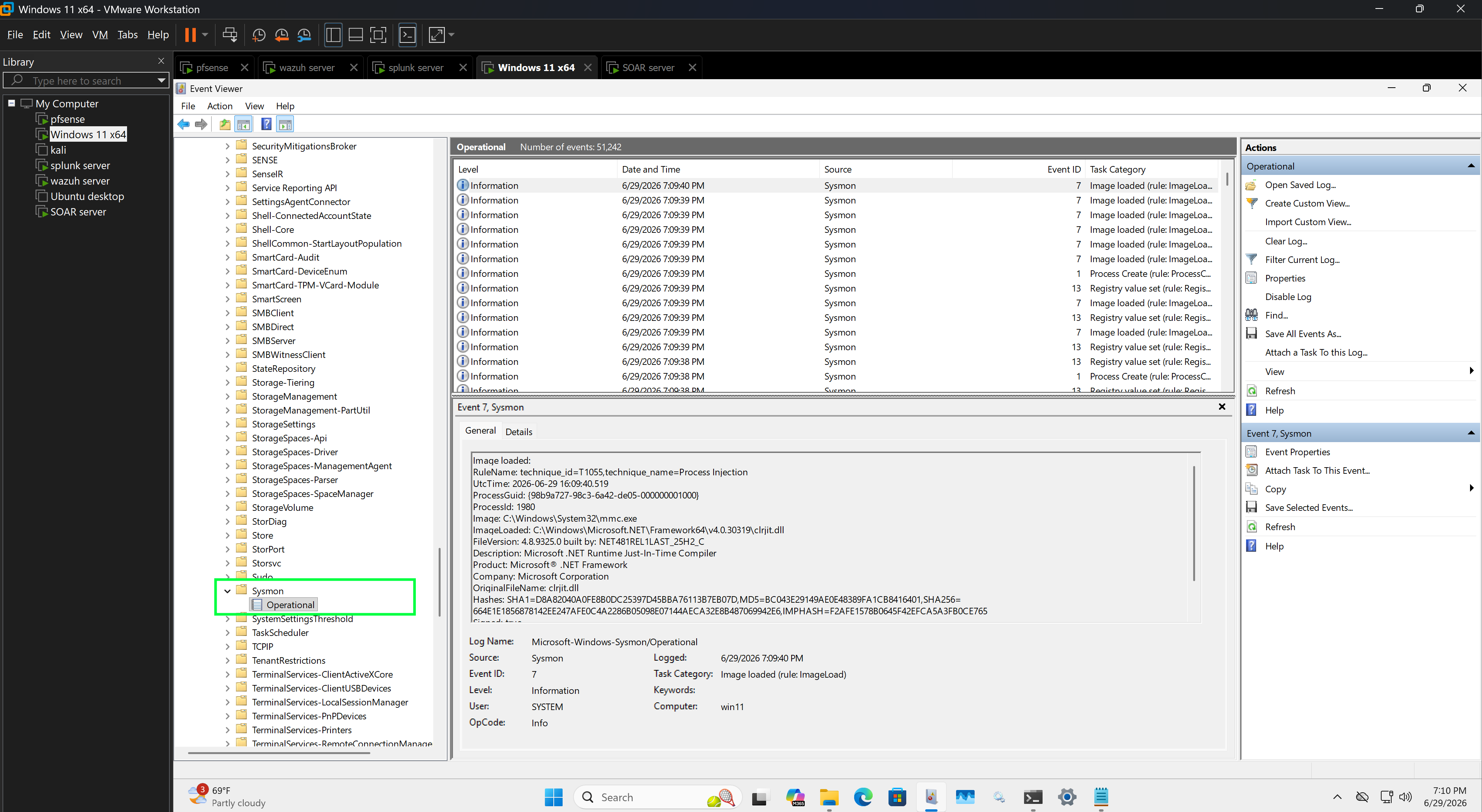
Ref 4. Windows 11 endpoint prepared with Sysmon, Splunk Universal Forwarder, and Wazuh Agent.
Windows 11 endpoint with SOC tooling
Ref 5. Additional endpoint evidence showing the installed monitoring stack used during workflow validation.
Endpoint telemetry instrumentation evidence

3. Splunk detection and correlation

Ref 6. Splunk evidence view used to validate the alerting and correlation stage before handing off to SOAR.
Splunk detection and correlation view

4. Wazuh telemetry and active response

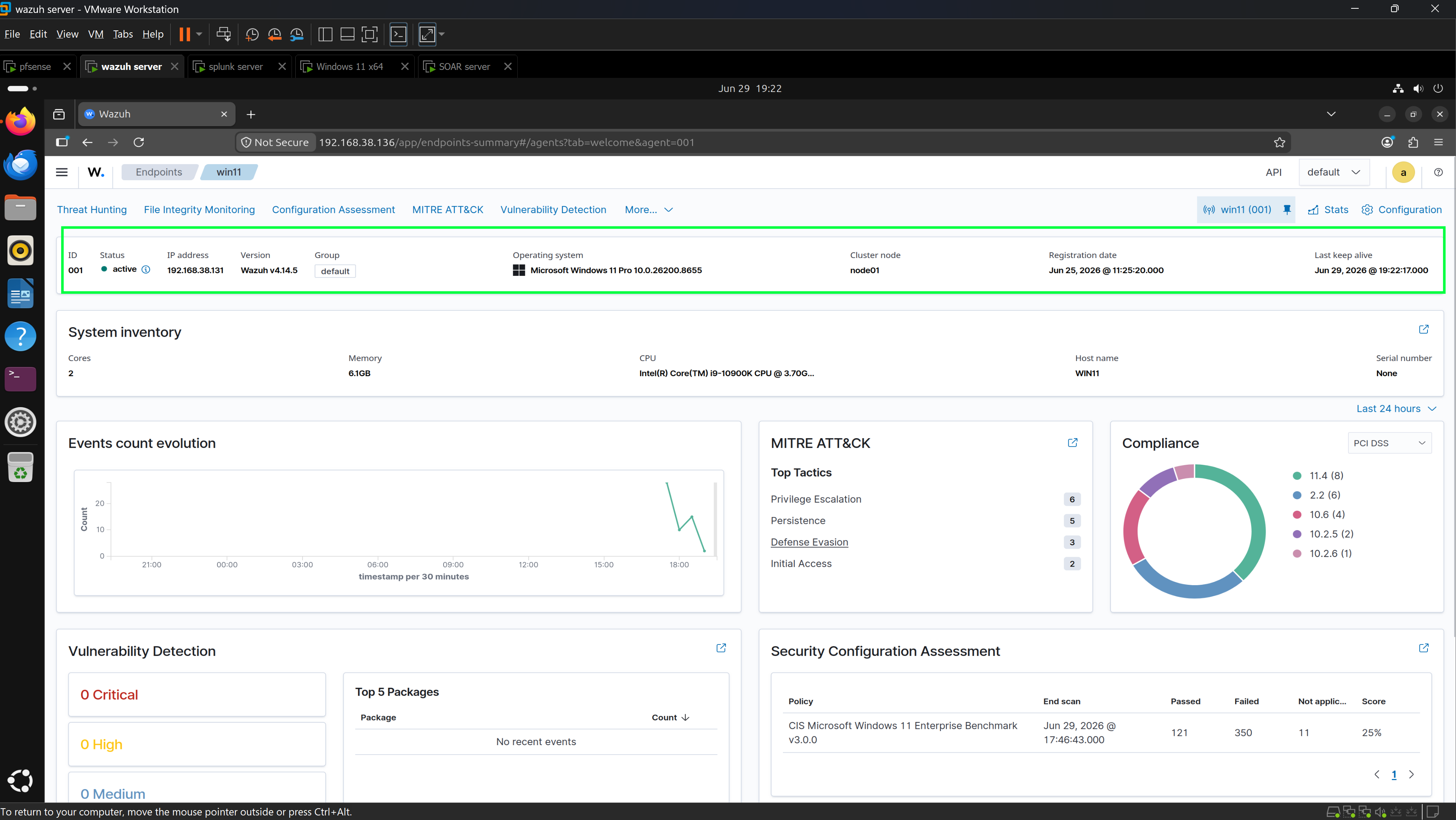
Ref 7. Wazuh alert forwarding into the centralized workflow.
Wazuh alert forwarding view
Ref 8. Wazuh active response enforcing host isolation through a firewall rule.
Wazuh active response isolation evidence

5. SOAR orchestration and case handling

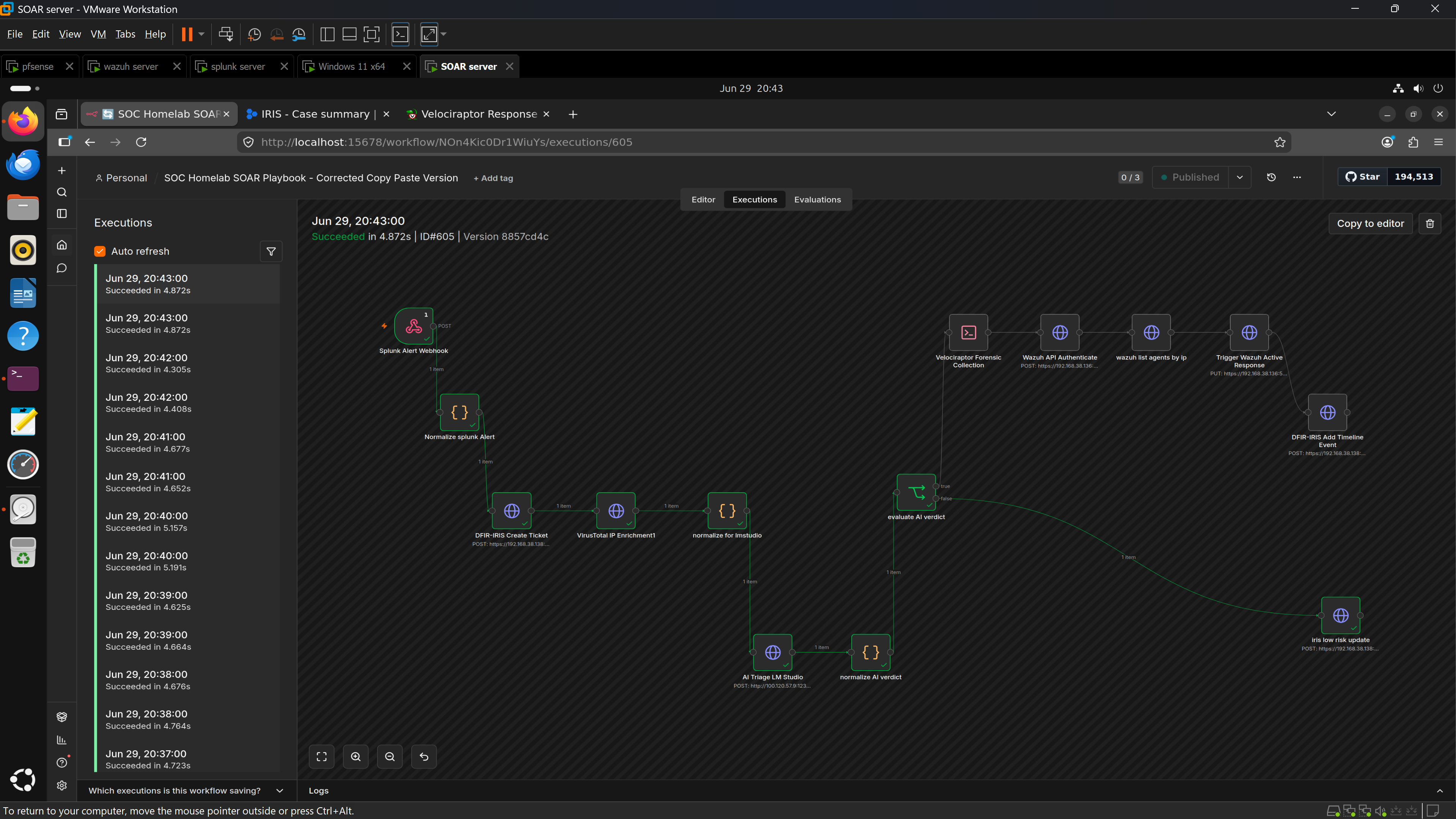
Ref 9. n8n workflow receiving Splunk alerts and orchestrating the response chain.
n8n workflow overview
Ref 10. n8n branching logic for enrichment, triage, case updates, and automated follow-on actions.
n8n branching and response logic
Ref 11. DFIR-IRIS investigation case created and updated for each alert.
DFIR-IRIS case management evidence

6. Forensic collection

Ref 12. Velociraptor forensic collection execution for the affected host.
Velociraptor collection evidence
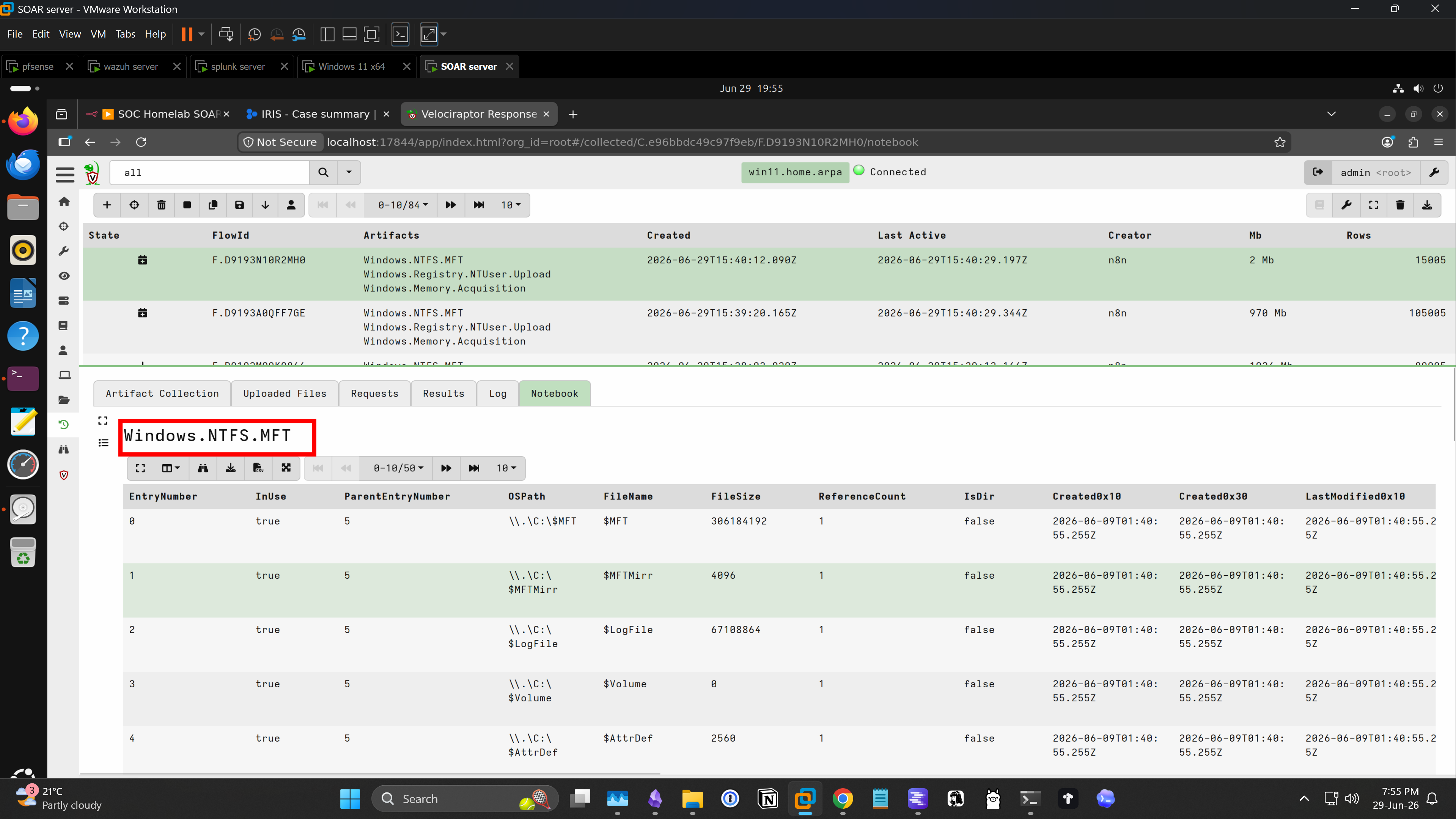
Ref 13. Master File Table artifact collection captured during the response workflow.
Master File Table artifact evidence
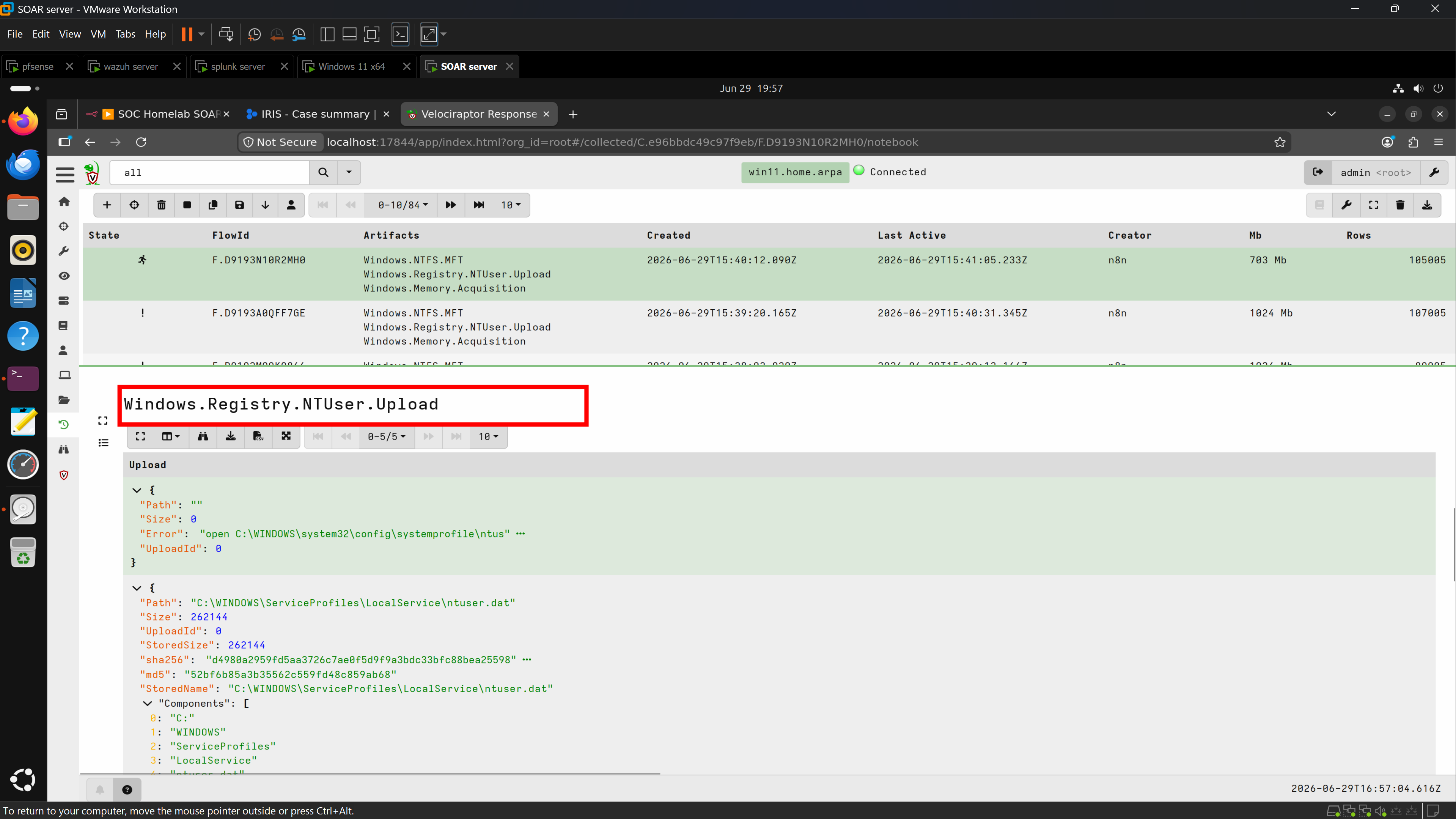
Ref 14. Windows Registry artifact collection preserved as part of automated triage.
Windows Registry artifact evidence